Archive for the 'anime' Category

2ch Copypaste Translation: Highest Single Disc Sales for Original TV Anime from 2006-2009

Thursday, May 27th, 2010

More 2ch copypaste since I’m bored and can’t turn on my lights to read manga since that’ll attract bugs. This is probably already reproduced somewhere on animesuki, but oh well. “Source is 2ch”, though I bet if you checked on the Oricon site or went to the diet library and took a look at Oricon Biz that you’d find numbers that agree with this! “Discs sold” is the number of discs listed as sold for the highest-selling single volume released of a given series.

But first, some pie charts:

from a Kadokawa booth at some convention or event or another.
Red = (light) novels
Green = manga
Purple = original
Blue = game
Yellow = other

Year Discs sold12 Title
2006 **,*** Sasami: Magical Girls Club
2006 **,*** Rakugo Tennyo Oyui
2006 **,*** Himawari!
2006 *2,616 Ayakashi Ayashi / Ghost Slayers Ayashi
2006 *2,377 Renkin San-kyuu Magical Poka~n
2006 **,*** Noein
2006 *2,220 Tactical Roar
2006 **,*** Akubi Girl
2006 **,*** Coyote Ragtime Show
2006 *2,489 Hell Girl Season 2
2006 **,*** Saint October
2006 **,*** Funny Pets< ?td>

2006 **,*** Hula Kappa
2006 **,*** Nerima Daikon Brothers
2006 *2,643 Galaxy Angel Rune
2006 **,*** Simoun
2006 *1,842 Rescue Wings
2006 **,*** Love Get Chu
2006 **,*** The Frogman Show
2006 **,*** Red Garden
2006 *1,248 009-1
2006 2,140 Ayakashi – Samurai Horror Tales
2006 **,*** The Galaxy Railways – Crossroads to Eternity
2006 68,821 Code Geass
2006 **,*** Glass Fleet
2006 **,*** Gin’iro no Olynssis
2006 **,*** Soukou no Strain
2006 **,*** Hime-sama Goyoujin
2006 **,*** Innocent Venus
2006 **,*** Night Head Genesis
2007 22,215 Tengen Toppa Gurren Lagann
2007 23,688 Magical Girl Lyrical Nanoha StrikerS
2007 **,*** Himawari!!
2007 **,*** Chibinacs
2007 *3,440 sola
2007 *3,471 Sky Girls
2007 **,*** El Cazador de la Bruja
2007 *2,8993  Gakuen Utopia Manabi Straight
2007 **,*** Gigantic Formula
2007 **,*** Dragonaut
2007 –,— Engage Planet Kiss Dum
2007 **,*** Kotetsu Sangokushi
2007 *1,374 Getsumen To Heiki Miina
2007 15,150 Mononoke
2007 *9,099 Darker than Black
2007 **,*** Sisters of Wellber
2007 **,*** Ghost Hound
2007 57,957 Gundam 00
2008 *1,278 Blassreiter
2008 24,643 Fireball
2008 *3,045 Hell Girl Season 3
2008 **,*** Shigofumi
2008 **,*** Bihada Ichizoku
2008 **,*** Glass Maiden (Crystal Blaze)
2008 **,*** Michiko to Hacchin
2008 **,*** The Daughter of Twenty Faces
2008 **,*** Real Drive
2008 59,041 Code Geass R2
2008 64,981 Macross F
2008 49,943 Gundam 00 Second Season
2008 *1,958 Xam’d: Lost Memories
2009 **,*** Munto TV
2009 *3,479 Sora Kake Girl
2009 **,509 Tokyo Magnitude 8.0
2009 **,*** Anyamal Tantei Kiruminzoo
2009 **,*** Element Hunters
2009 10,446 Eden of the East
2009 **,564 Basquash

I need a drink. As posters note, at least we’ll be able to count on Angel Beats! Hm, maybe two drinks.

  1. **,*** means all volumes failed to chart. []
  2. chart does not include remakes and kids shows []
  3. フヒヒ、サーセン []

More Details on the JAniCA/Agency for Cultural Affairs Animator Training Project

Tuesday, May 25th, 2010

…in condensed bullet point form of because there’s no way i’m completely translating a 39 page technical PDF just for fun, even if the project is really interesting.

Anyway, this project was announced earlier this month and the initial announcement about the basic form of the project (4 23-minute original animations to be produced with a 38 million yen budget each, with production focusing on the training of young animators) was picked up by the usual suspects. However, the general reaction on the comments sections seemed to be on the negative side, which was a little baffling to me. I have a lot of trust and respect for JAniCA, as they’ve been one of the most staunch supporters of animators (see translations here, here, and just about every substantial report over the last few years about animator salaries) and so the endless comments of “what is government doing???? just give money to the animators!!” were a little disheartening. These complaints seemed especially silly since the government funding is only coming in at around $2 million US, which in my admittedly rather business-ignorant mind isn’t going to do a whole lot if they just threw it towards wages. (Though if they took the proposed $130 million LDP budget for the manga library and gave that cash to animators, then maybe it’d be a different story…)

Anyway, I got to looking at the detailed application sheet that JAniCA put out a few days later, and wouldn’t you know it, it looks like a very well-meaning, intelligently drafted, and fast-acting plan! Anyway, here are your bullet points, as promised earlier. I’m doing this on a bit more of a rush than normal for me, so goyaku gomen. Please leave comments if you have any corrections/questions.

(more…)

Spring 2010, some 3+ episode tests

Friday, May 21st, 2010

I guess I’ve watched more than 3 episodes of some of these, but I have no idea what a schedule is and forgot to write this. Oh well…

Working!!
A 4koma anime that feels like a 4koma anime, produced by A-1 Pictures channeling J.C. Staff. It has some nice character ideas, but the execution is a bit too straightforward, so it’s a little boring – still watchable, but I don’t love it. I wish it was by SHAFT somehow, even though I was very bored with Arakawa (dropped at 2 episodes).
The opening doesn’t really know what it’s doing – half of it is new and interesting, and half of it seems to be shots copied from Azumanga Daioh. My notes say “ed is stupid”, but I can’t remember anything about it, so let’s leave it at that.
I hear the later episodes are more solid and that there’s a new character with hime cut. Watching.

Giant Killing
A soccer anime by Studio DEEN with actual money. I thought it was really interesting that a DEEN show with a budget has better drawings and movement, but still has horrible washed-out coloring choices for everything. Actually, I thought that was more interesting than the show – I’ve never seen a sports anime before, so it’s kind of cool, but the early part is just the coach making up magic quirky strategies for everything instead of something more realistic.
I’ll have to look ahead and see if it goes anywhere, otherwise dropped at 3 episodes.

Sarai-ya Goyou / House of Five Leaves
A samurai show made by manglobe that’s REALLY BORING!
Nothing has happened in 3 episodes except for one swordfight, so it doesn’t matter how good the art is (it’s good). Dropped.

Senkou no Night Raid
Psychic superpower action series by A-1 Pictures channeling Bones. I’m watching this untranslated, and the fake Chinese politics sort of goes over my head, so without that it’s just a watchable but slow action drama – a lot of things happen, but not in a really interesting way. I’d rather finish Darker than Black, really. I’ve heard some other people say it was “awful”, but I can’t really tell what’s annoying them. Watching halfheartedly.

The OP is a really complicated animation that looks cool and doesn’t match the actual show at all.

They make it sound like the psychics are an important national secret, but then in episode 3 they’re teleporting bombs out of buildings all over the place. Won’t someone notice?

Now that I think about it, the only things I’ve seen in the last few weeks were Angel Beats! and K-ON!!. More about that later.

2ch Copypaste of the Day: What the Average Citizen Knows about Robot Anime Series

Wednesday, May 5th, 2010

Taken from a 2ch copypaste that’s making the rounds today

Gundam: That story where Amuro and Char fight

Eva: Pachinko

Macross: Singing

Geass: Never heard of it

Votoms: Follows a main character named Chirico Cuvie (Kiriko Kyuubi), a former special forces Armored Trooper pilot and former member of the Red Shoulder Battalion, an elite mecha force used by the Gilgamesh Confederation in its war against the Balarant Union—both interstellar nations within the distant Astragius Galaxy. Gilgamesh and Balarant had until recently been locked in a century-old galactic war whose cause was long ago forgotten. Now, the war is ending and an uneasy truce has settled. Chirico Cuvie is suddenly transferred to a unit engaged in a suspicious mission, unaware that he is aiding to steal secrets from what appears to be his own side. Chirico is betrayed and left behind to die, but he survives, is arrested by the Gilgamesh military as a traitor, and tortured for information on their homeworld. He escapes—triggering a pursuit extending across the entire series, with Chirico hunted by the army and criminals alike as he seeks the truth behind the operation. He is driven to discover the truth of one of the objects he was assigned to retrieve in that operation: A mysterious and beautiful woman who would become his sole clue to unraveling the galactic conspiracy.1

  1. The original post copy/pastes the first section of the Japanese wiki summary of the series so I’ve done likewise with English here. []

A 2ch Poster’s Reading of Anime DVD/BD Sales Charts

Monday, May 3rd, 2010

Or “Sales Barriers for Anime”

This was originally going to be named “how 2ch reads sales charts” but then I remembered that trying to classify any part of 2ch as a singular is a rather foolish thing to do unless you want hits. Wait, oops.

Anyway, this is obviously not gospel truth, but a neat, simplified guide by someone who is clearly somewhat of an industry watcher and a brave warrior on the battlegrounds of the 2ch sales threads. Disc sales numbers referred to here are Oricon numbers.

~500
Mostly anime where disc sales are not a main concern from the beginning; either truly insignificant shows1 or close to it.
Ex: NHK anime, Children’s anime, Pay channel shows (WOWOW, etc), Nippon TV late night shows, Gonzo shows, IG Original shows, etc

501~800
Mostly insignificant shows. Shows in this area generally failed to attract any interest and are looked upon as endangered, shadowy species.
Ex: Gin’iro no Olynssis, Hyakko, Hero Tales, Shikabane Hime, Akikan!, etc

801~1200
The line between significance and insignificance. Depending on the week, the title may chart if it gets lucky. However, these titles are normally frightened away from the charts, as they’re afraid that Totoro might squash them.
Ex: Yozakura Quartet, Blassreiter, Simoun, Kaze no Stigma, Nabari no Ou, etc

1201~1800
Significant enough to not count as insignificant. However, their poor sales are generally enough to chart, often causing people to only feel pity or sympathy for them.
Ex: Ghost Slayers Ayashi, Galaxy Angel Rune, Kimikiss, Our Home’s Fox Deity, Kyoran Kazoku Nikki, etc

1801~2300
Light novel anime often falls in this category. Might be enough to turn a profit with Kadokawa DVD pricing. The title considered the hurdle is now quantified as a single unit of sales, as in “one Zega.” Anime in this category is considered to be in dangerous territory, as Manabi, the problem child, often makes faces at these titles.
Ex: Rental Magica, Goshusho-sama Ninomiya-kun, Kurenai, Shinkyoku Sokai Polyphonica, Zegapain, etc.

2301~3000
Many titles fall in this category. Marginally performing shows, many of which didn’t sell as much as their popularity would make you think they would.
Ex: Manabi Straight!, true tears #1, Sketchbook, Gun X Sword, Yami to Boshi to Hon no Tabibito

3001~4000
The line of profitability. Also the line at which one could say a title is doing okay, but some may call some titles that sell this many a failure, so it’s quite hard to judge.
Ex: Denno Coil, Soul Eater, School Days, Linebarrels of Iron, Super Robot Swars OG, etc

4001~5000
Titles that gathered a reasonable amount of attention and sold reasonably well. Posters may still make fun of these titles’ sales, but they’re rarely considered “failures.” Growth stocks.
Ex: Seto no Hanayome, Bamboo Blade Garei -Zero-, Higurashi no Naku Koro Ni, Planetes, etc

5001~7000
The point where a second season looks likely, and a reasonable number of discs one can hope to sell. Producers seem to begin to be praised at this point.
Ex: Strawberry Marshmallow, Rozen Maiden, Hidamari Sketch, The Familiar of Zero, Darker than Black, etc

7001~9000
Impressive sales, favorites that can easily be called “hits.”
Ex: Spice and Wolf, Full Metal Panic Fumoffu, Nodame Cantabile, My-Otome, Sgt. Frog, etc

9001~11,000
The entry point into the world of five-figure sales. There is no problem with calling regular late night anime that sell this much a “major hit.”
Ex: Toradora, Shakugan no Shana, Natsume’s Book of Friends, Pani Poni Dash!, Fafner in the Azure, etc

11,001~15,000
The top class of sales for titles that target the narrow otaku community. Praiseworthy honors students.
Ex: Minami-ke, s-CRY-ed, Da Capo, Strike Witches, Eureka Seven, etc

15,001~20,000
The point at which people who normally don’t buy DVDs begin to buy a title. Outstanding works brimming with frontier spirit.
Ex: Gintama, Death Note, Big Windup, Aria the Animation, Negima, etc

20,001~25,000
Properties with many strong, ardent, and powerful supporters. Major stars with deep fanbases.
Ex: Air, Tengen Toppa Gurren-Lagann, Magical Girl Lyrical Nanoha StrikerS, Clannad, Hetalia, etc

25,001~35,000
Titles in between the above and below categories that stand as influential and steadfast titles.
Ex: Lucky Star, Azumanga Daioh, G.I.T.S. SAC 2nd GIG, Initial D 4th Stage, Fate/Stay Night, etc

35,001~50,000
New leaders that become the talk of the industry. Incredible flamewars break out between supporters of titles of this group and titles in the next tier.
Ex: Full Metal Alchemist, The Melancholy of Haruhi Suzumiya, Code Geass, Macross F, Gundam 00, etc

50,001~100,000
In a completely different class from the rest. Godly sales.
Ex: Gundam SEED, theatrical anime (Kara no Kyokai, The Girl Who Leapt Through Time), Bakemonogatari, etc

100,001~
Theatrical anime or anime made for the public at large. The stars of the industry.
Ex: Ghibli anime, Eva films, Zeta Gundam: A New Translation, Final Fantasy VII Advent Children, The World of Golden Eggs, etc

  1. keep in mind that the kind of poster who would make this chart judges a show’s worth by its economic performance. original term 雑魚, or “small fry” []

Sakuga@wiki’s List of Recommended Sakuga Anime

Saturday, May 1st, 2010

Completely via 作画@wiki:

“A listing of works whose animation (sakuga) stands out due to quality, uniqueness, or historic importance.”

(Note: I have made an attempt to use English/US titles when possible.)


Theatrical Films A-L
Theatrical Films M-Z
OVA
TV Specials
TV Series
Games
Other
Foreign Works


Theatrical Films A-L

  • A Tree of Palme (Palm Studio, 2002)
  • AKIRA (Tokyo Movie Shinsha, 1988)
  • Animal Treasure Island (Toei Doga, 1971)
  • Blood: The Last Vampire (Production I.G., 2000)
  • Bobby’s Girl (Madhouse, 1985)
  • Brave Story (Gonzo, 2006)
  • Catnapped! The Movie (Triangle Staff, 1998)
  • Chibi Maruko-chan: My Favorite Song (Ajiado, 1992)
  • Coo: Toi Umi kara Kita Coo (Toei Animation, 1993)
  • Cowboy Bebop: Knockin’ on Heaven’s Door (Bones, Sunrise, 2001)
  • Crayon Shin-chan: Adventure in Henderland (Shin-Ei Doga, 1996)
  • Crayon Shin-chan: Unkokusai’s Ambition (Shin-Ei Doga, 1996)
  • Dead Leaves (Production I.G., 2004)
  • Digimon Adventure (Toei Animation, 1999)
  • Digimon Adventure: Our War Game! (Toei Animation, 2000)
  • Digimon Aventure 02: Diaboromon Strikes Back (Toei Animation, 2001)
  • Doraemon: Nobita’s Dinosaur (Shin-Ei Doga, 2006)
  • Doraemon: The Day When I Was Born (Shin-Ei Doga, 2002)
  • Escaflowne: the Movie (Sunrise, Bones, 2000)
  • Eureka Seven: Pocket Full of Rainbows (Bones, Kinema Citrus, 2009)
  • Evangelion: 1.0 You Are (Not) Alone (Khara, 2007)
  • Evangelion: 2.0 You Can (Not) Advance (Khara, 2009)
  • Fatal Fury: The Motion Picture (Studio Comet, 1994)
  • Fullmetal Alchemist the Movie: Conqueror of Shamballa (Bones, 2005)
  • Galaxy Express 999 (Toei Doga, 1979)
  • Gauche the Cellist (Oh! Production, 1982)
  • Genius Party (Studio 4℃, 2007)
  • Genius Party Beyond (Studio 4℃, 2008)
  • Ghiblies: Episode 2 (Studio Ghibli, 2002)
  • Ghost in the Shell (Production I.G., 1995)
  • Ghost in the Shell: Innocence (Production I.G., 2004)
  • Golgo 13 (Tokyo Movie Shinsha, 1983)
  • Grave of the Fireflies (Studio Ghibli, 1998)
  • Gurren Lagann The Movie: Childhood’s End (Gainax, 2008)
  • Gurren Lagann The Movie: The Lights in the Sky are Stars (2009)
  • Harmageddon (Madhouse, 1983)
  • Hashire Melos! (Visual 80, 1992)
  • Hols: Prince of the Sun (Toei Doga, 1968)
  • Howl’s Moving Castle (Studio Ghibli, 2004)
  • Inuyasha the Movie 4: Fire on the Mystic Island (Sunrise, 2004)
  • Jin-Roh (Production I.G., 2000)
  • Junkers Come Here (Triangle Staff, 1995)
  • Kaiketsu Zorori (Ajiado, Sunrise, 2006)
  • Kara no Kyoukai (ufotable, 2007-2009)
  • Kiki’s Delivery Service (Studio Ghibli, 1989)
  • Kumo to Churippu (“Spider and Tulip”) (Shochiku Doga Kenkyuujo, 1943)
  • Laputa: Castle in the Sky (Studio Ghibli, 1986)
  • Lensman (Madhouse, 1984)


Theatrical Films M-Z

  • Macross: Do You Remember Love? (Tatsunoko Pro, 1984)
  • Mai Mai Miracle (Madhouse, 2009)
  • Memories (Studio 4℃, 1995)
  • Metropolis (Madhouse, 2001)
  • Millenium Actress (Madhouse, 2002)
  • Mind Game (Studio 4℃, 2004)
  • Mobile Suit Gundam: Char’s Counterattack (Sunrise, 1988)
  • Munto: Tenjobito to Akutobito Saigo no Tatakai (Kyoto Animation, 2009)
  • My Neighbor Totoro (Studio Ghibli, 1988)
  • My Nighbors the Yamadas (Studio Ghibli, 1999)
  • Naruto Shippuden 3: Inheritors of the Will of Fire (Studio Pierrot, 2009)
  • Naruto: Guardians of the Crescent Moon Kingdom (Studio Pierrot, 2006)
  • Naruto: Legend of the Stone of Gelel (Studio Pierrot, 2005)
  • Naruto: Ninja Clash in the Land of Snow (Studio Pierrot, 2004)
  • Naruto: Shippuden the Movie 2: Bonds (Studio Pierrot, 2008)
  • Nasu: Summer in Andalucia (Madhouse, 2003)
  • Nausicaa of the Valley of the Wind (Topcraft, 1984)
  • Neo-Tokyo (Project Team Argos, Madhouse, 1987)
  • Ninku: The Movie (Studio Pierrot, 1994)
  • One Piece the Movie: Episode of Chopper + Fuku ni Saku, Kiseki no Sakura (Toei Animation, 2008)
  • One Piece the Movie: Omatsuri Danshaku to Himitsu no Shima (Toei Animation, 2005)
  • One Piece: Taose! Kaizoku Ganzakku! (Production I.G., 1998)
  • Only Yesterday (Studio Ghibli, 1991)
  • Paprika (Madhouse, 2006)
  • Patlabor 2: The Movie (Production I.G., 1993)
  • Perfect Blue (Madhouse, 1998)
  • Pom Poko (Studio Ghibli, 1994)
  • Ponyo (Studio Ghibli, 2008)
  • Porco Rosso (Studio Ghibli, 1992)
  • Princess Mononoke (Studio Ghibli, 1997)
  • Puss in Boots (Toei Doga, 1969)
  • Rojin Z (A.P.P.P., 1991)
  • Royal Space Force: The Wings of Honneamise (Gainax, 1987)
  • Slime Boukenki ~Umi da, Ie-~ (Production I.G., 1999)
  • Spirited Away (Studio Ghibli, 2001)
  • Spriggan (Studio 4℃, 1998)
  • Steamboy (Sunrise, 2004)
  • Summer Wars (Madhouse, 2009)
  • Sword of the Stranger (Bones, 2007)
  • Tekkon Kinkreet (Studio 4℃, 2006)
  • The Animatrix (Studio 4℃, Madhouse, others, 2003)
  • The Castle of Cagliostro (Tokyo Movie Shinsha, 1979)
  • The Dagger of Kamui (Project Team Argos, Madhouse, 1985)
  • The End of Evangelion (Production I.G., Gainax, 1997)
  • The Girl Who Leapt Through Time (Madhouse, 2006)
  • The Sky Crawlers (Production I.G., 2008)
  • Tobe! Kujira no Peek (Urban Product, 1991)
  • Tobe! Pegasus (Shinano Kikaku, 1995)
  • Tokyo Godfathers (Madhouse, 2003)
  • Vampire Hunter D (Madhouse, 1999)
  • Venus Wars (Triangle Staff, 1989)
  • Wanpaku Oji no Orochi Taiji (Toei Doga, 1963)
  • Whisper of the Heart (Studio Ghibli, 1995)
  • Wicked City (Madhouse, 1987)
  • Windaria (Kaname Production, 1986)
  • X: the Movie (Madhouse, 1996)
  • xxxHolic: A Midsummer Night’s Dream (Production I.G., 2005)
  • Yu Yu Hakusho The Movie: Poltergeist Report (Studio Pierrot, 1994)


OVA

  • Animation Runner Kuromi 2 (Yumeta Company, 2003)
  • Armored Trooper VOTOMS: Shining Heresy (Sunrise, 1994)
  • Battle Royal High School (D.A.S.T., 1987)
  • Black Magic M-66 (A.I.C., 1987)
  • Blue Submarine No.6 (Gonzo, 1998-2000)
  • Cat Soup (J.C. Staff, 2001)
  • Cream Lemon Part 4: Pop Chaser (Fairy Dust, 1985)
  • Darkside Blues (J.C. Staff, 1994)
  • Diebuster (Gainax, 2004-2006)
  • Doomed Megalopolis (Madhouse, 1991)
  • Download: Namuamidabutsu wa Ai no Uta (Madhouse, 1992)
  • Dragon Quest Fantasia Video (Gainax, 1988)
  • FLCL (Production I.G., Gainax, 2000-2001)
  • Giant Robo: The Day the Earth Stood Still (Phoenix Entertainment, 1992-1998)
  • Golden Boy (A.P.P.P., 1995-1996)
  • Gosenzo-sama Banbanzai! (Studio Pierrot, 1989-1990)
  • Gunbuster (Gainax, 1988-1989)
  • Idol Project (Studio OX, 1995-1997)
  • Jojo’s Bizarre Adventure (A.P.P.P., 1993-1994, 2000-2002)
  • Karas (Tatsunoko Pro, 2005-2007)
  • Leda: The Fantastic Adventure of Yoko (Kaname Production, 1985)
  • Macross Plus (Triangle Staff, 1994-1995)
  • Megazone 23 Part II (A.I.C., 1986)
  • Mezzo Forte (Arms, 2000-2001)
  • Mighty Space Miners (Triangle Staff, 1994-1995)
  • Mobile Suig Gundam 0083: Stardust Memory (Sunrise, 1991-1992)
  • Mobile Suit Gundam 0080: War In the Pocket (Sunrise, 1989)
  • Nasu: A Migratory Bird with Suitcase (Madhouse, 2007)
  • Nyuin Bokki Monogatari Odaiji Ni (Tokyo Kids, 1991)
  • Photon (A.I.C., 1997-1999)
  • Planet Busters (Kaname Production, 1984)
  • Planet of Miss China (Ajiado, 2001)
  • Puppet Princess (Tokyo Movie, 2000)
  • Ranma 1/2: Nightmare! Incense of Spring Sleep (Studio Deen, 2008)
  • Re: Cutie Honey (Toei Animation, Gainax, 2004)
  • Record of Lodoss War (Madhouse, 1990-1991)
  • Refrain (Oh! Production, 1993)
  • Robot Carnival (A.P.P.P., 1987)
  • Rurouni Kenshin: Reflection (Studio Deen, 2001-2002)
  • Rurouni Kenshin: Trust and Betrayal (Studio Deen, 1999)
  • Saber Marionette R (Animate Film, Zero-G Room, 1995)
  • Street Fighter Alpha: Generations (A.P.P.P., 2005)
  • Street Fighter Alpha: The Movie (Group TAC, Plum, 2000)
  • Tenyamonya Voyagers (Studio Pierrot, 1999)
  • The Fire G-Men (Yomiuri Eigasha, 1974)
  • The Hakkenden (AIC, 1990-1991)
  • The Hakkenden ~Shinsho~ (AIC, 1993-1995)
  • Urotsukidoji (Original Trilogy) (1987-1989)
  • Virgin Night (Shinkuukan, 2001)
  • Wild Cardz (Studio OX, 1997)
  • You’re Under Arrest! (Studio DEEN, 1994-1995)


TV Specials

  • Afro Samurai (Gonzo, 2007)
  • Fatal Fury: Legend of the Hungry Wolf (Studio Comet, 1992)
  • Hajime no Ippo: Champion Road (Madhouse, 2003)
  • Like the Clouds, Like the Wind (Studio Pierrot, 1990)
  • Lupin III: Walther P-38 (Kyokuichi Tokyo Movie, 1997)
  • Spring and Chaos (Group TAC, 1996)
  • Sugata Sanshiro (Tokyo Movie Shinsha, 1981)
  • The Ocean Waves (Studio Ghibli, 1993)


TV Series

  • 3000 Leagues in Search of Mother (Nippon Animation, 1976)
  • Ayakashi: Samurai Horror Tales (Toei Animation, 2006)
  • Blue Comet SPT Layzner (Sunrise, 1985-1986)
  • Casshern Sins (Madhouse, 2008-2009)
  • City Hunter (Nippon Sunrise, 1987-1988)
  • Cowboy Bebop (Sunrise, 1998)
  • Denno Coil (Madhouse, 2007)
  • Dokkoida?! (ufotable, 2003)
  • Dokonjo Gaeru (Tokyo Movie, 1972-1974)
  • Eureka Seven (Bones, 2005-2006)
  • Full Metal Alchemist (Bones, 2003-2004)
  • Future Boy Conan (Nippon Animation, 1978)
  • Gaiking Legend of Daiku-Maryu (Toei Animation, 2005-2006)
  • Ganba no Boken (Tokyo Movie, 1975)
  • Ganzo Tensai Bakabon (Tokyo Movie, 1975-1977)
  • Ghost in the Shell S.A.C. 2nd GIG (Production I.G., 2004-2005)
  • Ghost in the Shell: Stand Alone Complex (Production I.G., 2002-2003)
  • Kaiba (Madhouse, 2008)
  • Kaiketsu Zorori (Anba Filmworks, Ajiado, 2004-2005)
  • Kamichu! (Brain’s Base, 2005)
  • Kemonozume (Madhouse, 2006)
  • K-On! (Kyoto Animation, 2009)
  • Lupin III (First series) (Tokyo Movie, 1971-1972)
  • Lupin III (Second series, episodes created by Telecom) (Tokyo Movie Shinsha, 1977-1980)
  • Machine Robo: Revenge of Chronos (Ashi Production, 1986-1987)
  • Magic Knight Rayearth (Tokyo Movie, 1994-1995)
  • Magical Shopping Arcade Abenobashi (Madhouse, 2002)
  • Master Keaton (Madhouse, 1998-1999)
  • Medabots (Bee Train, 1999-2000)
  • Mononoke (Toei Animation, 2007)
  • Moribito: Guardian of the Spirit (Production I.G., 2007)
  • Neo Ranga (Studio Pierrot, 1998-1999)
  • Neon Genesis Evangelion (Tatsunoko Pro, Gainax, 1995-1996)
  • Ninku (Studio Pierrot, 1995-1996)
  • Noein: To Your Other Self (Sattelite, 2005-2006)
  • Paranoia Agent (Madhouse, 2004)
  • Popolocrois Monogatari (Bee Train, 1998-1999)
  • R.O.D. -THE TV- (J.C. Staff, 2003-2004)
  • Rahxephon (Bones, 2002)
  • Red Photon Zillion (Tatsunoko Pro, 1987)
  • Revolutionary Girl Utena (J.C. Staff, 1997)
  • Samurai Champloo (Manglobe, 2004)
  • Sasuga no Sarutobi (Tsuchita Production, 1982-1984)
  • Space Battleship Yamato (Office Academy, 1974-1975)
  • Space Cobra (Tokyo Movie Shinsha, 1982-1983)
  • Space Pirate Captain Herlock (Madhouse, 2003)
  • Tengen Toppa Gurren Lagann (Gainax, 2007)
  • The Adventures of Peter Pan (Nippon Animation, 1989)
  • The Vision of Escaflowne (Sunrise, 1996)
  • Windy Tales (Production I.G., 2004-2005)
  • Xam’d: Lost Memories (Bones, 2008-2009)
  • Yu Yu Hakusho (Studio Pierrot, 1992-1995)

Selected episodes from other TV series (note: coming soon?)


Games

  • 3-nen B-gumi Kinpachi Sensei: Densetsu no Kyoudan ni Tate! (Chunsoft, 2004)
  • Akiiro Renka OP (2005)
  • Double Cast (Production I.G., 1998)
  • Ghost in the Shell (Production I.G., 1997)
  • Hanjuku Hero 4: 7-nin no Hanjuku Hero (Tatsunoko Pro, 2005)
  • Hanjuku Hero Tai 3D OP (Tatsunoko Pro, 2003)
  • Magical Girl Pretty Sammy: Heart no Kimochi extra movie, “My Favorite Boy” (1998)
  • Musashi: Samurai Legend OP (Gainax, 2005)
  • Muv-Luv Alternative (Stack, Silver, 2006)
  • Popolocrois Monogatari (Triangle Staff, 1996)
  • Popolocrois Monogatari II (Production I.G., 2000)
  • Quo Vadis 2: Wakusei Kyoshuu Orphan Rei (1997)
  • Sakura Wars 3 (Production I.G., 2001)
  • Sakura Wars 4 (Production I.G., 2002)
  • Sentimental Graffiti (Marcus, 1998)
  • Sonic CD
  • Summon Night 2 (Production I.G., 2001)
  • Summon Night 3 (Studio 4℃, 2003)
  • Summon Night 4 (Production I.G., 2006)
  • Surveillance Kanshisha (Production I.G., 2002)
  • Tales Series (Production I.G.)
  • Wild Arms 2 OP (1999)
  • Wild Arms 3 OP (2002)
  • Xenogears (Bee Train, 1998)


Other

PVs

  • Glay, “Survival” (Studio 4℃, 1999)
  • Ken Ishii, “EXTRA” (Studio 4℃, 1994)
  • Linkin Park, “Breaking the Habit” (Gonzo, 2004)
  • Yui Aragaki, “Piece” (Studio Ghibli, 2009)

Independent

  • Daicon IV Opening Animation (DAICON FILM, 1983)
  • Kenta to Panna Cotta (Yoyogi Animation Gakuin Fukuoka Campus Class of 2000 Graduation Project)

Other

  • capsul3Bunsaku (Studio Ghibli, 2005)
  • Jumping (Tezuka Production, 1984)
  • Superflat Monogram (Toei Animation, 2003)
  • X2 -Double X- (Animate Film, Madhouse, 1993)


Foreign Works

  • Bambi (USA, 1942)
  • Snow White and the Seven Dwarves (USA, 1937)
  • The Cowboy’s Flute (PRC, 1963)
  • The Secret of NIMH (USA, 1982)
  • The Snowman (England, 1982)
  • The Fly (Hungary, 1980?)
  • Tom and Jerry (USA, 1940)
  • Tom and Jerry: The Cat Concerto (USA, 1946)

Is it True? Everyone Working in Anime is Poor?

Thursday, April 15th, 2010

Blogger’s/Translator’s introduction: This is the followup post to an earlier translation of 30-year veteran animator and director Yamasaki Osamu‘s blog post regarding the financial situation of the animation industry and animators in specific. Again, this post was originally posted on his blog on the JAniCA (Japan Animation Creators Association) website. Again, I would like to thank Yamasaki-san and Nekomiya-san from JAniCA for allowing me to translate and post the following article.

—————

It seems like some people misunderstood my previous post about the disastrous situation going on with new animators, and thought that everyone involved in anime production is in the same situation, but the situation isn’t that miserable… at least, that’s how I feel.

To put it better, whether you’re someone making a decent living or if you’re someone sliding into poverty, two groups of people who coexist in the anime industry, depends on what department you’re working in, not your experience or your accomplishments… would be the way to put it.

I wrote that if you halved the unit price paid per drawing for painters, then inbetweeners could make a living. However, if you wanted to adjust the budget in other ways, I can come up with a lot of ways to do it.

I’m not sure if I should write something like this in a place like this, but… In the anime industry right now, production supervisors, the people that ought to know how to allocate a budget, have no idea what’s actually going on in the studios. As a result, I think that this is causing the state of the industry to grow worse and worse.

And so… I’ll take it upon myself to say this here:

“A lot of anime production staff are making plenty of money!!”
“What’s more, all that’s needed to save inbetweeners is 500,000 yen ($5,500 usd) an episode from a 10 million yen ($112,000) TV series episode budget!”

How much money is needed to raise the unit cost for an inbetweener from 200 to 300 yen? How much are we missing? An average episode uses 4000-5000 in-between frames. Looking at those numbers, how short are we falling? All you need is 500,000 yen an episode to give this raise.

Is it really not possible to raise this amount of money?

Last time, I wrote about reducing the unit cost for painters, but I think there are plenty of other places where you can find the money.

To give one example that I’m aware of, let’s look at sound director pay.

A sound director for a TV series makes an average of 150,000-180,000 yen ($1,675-$2000) an episode.
The director for the same episode makes 200,000-250,000 yen ($2,200-2,800).
The animation director makes around 300,000 yen ($3,350).

On first glance, these numbers might look fair, but in reality, that’s not the case at all. I wrote about this last time, but an animation director is bound for about a month and a half to the job he’s paid 300,000 yen for, so that comes out to making around 200,000 yen a month.

For directors, it might take six months preparation to begin work on a 25-26 episode (half-year) series, so you could calculate their monthly pay to be about 500,000 yen ($5,600).

In comparison, a sound director takes two days to complete an episode, including preparation time. Therefore, a lot of sound directors work on 2-3 titles at a time, for a total of 3 episodes a week. Taking on 12 episodes a month isn’t hard or uncommon.
Monthly pay: 150,000 yen x 12 episodes = 1,800,000 yen ($20,000).
Sound directors who make over 20,000,000 yen ($223,000) a year are common.

As for scenario writers, they make around 180,000 yen ($2,000) a script and work on 2-3 at a time, but unlike sound directors, it’s fairly unheard of to write a completed script in 2 days. We can say that they finish an average of 1-2 scripts in an average month, putting their monthly income from manuscript fees at about 300,000 ($3,350) yen.
Whether you think this is a lot or a little, depending on the show1, a writer may be paid script royalties if the work becomes a hit, making millions of yen without doing any extra work. Since one could be working on three or more shows each month, the chances that a writer will write a script for a hit series increases.
As a result, a writer who does proper work would reach 10 million yen ($110,000) a year.
Of course, there are writers who make more, and I’m sure there are writers who don’t make this much.

One thing you can definitely say, though, is that a series becoming a hit or not isn’t necessarily linked to the quality of the script.

Besides these examples, 800,000-1,000,000 yen (~$9,000-$11,000) an episode is allotted to cinematography an episode. A cinematography team is made up of 4-5 people, and complete one TV episode in 3-4 days.
Aside from this, other “sentori” jobs for the team such as inbetween photography, keyframe photography, and storyboard photography2 may arise if there isn’t tight control on the schedule, and these jobs are included in the pay.
Even so, the 4-5 person team ends up making a total of 4 million yen or more a month. ($44,500)

Looking at the numbers I’ve written above, you could conceivably compare the level of each section’s pay to the average in other industries and say something like “Well… around 20 million yen a year seems normal.” After all, that’s around what the salaried employees at the TV stations and the ad agencies make, so people involved in anime making that much doesn’t seem too strange.

However, when you think what it takes to actually produce a given anime, how much does each of these groups contribute? How much should each section really be paid?
I think that producers ought to think about these things.

Aren’t sound directors being paid too much?
If you’re going to pay screenwriters royalties, do you really need to also pay guarantees?
Do you really have to pay so much to low-level writers whose involvement amounts to being middlemen for the person doing series composition?
Aren’t cinematographers being given extra work because production managers are careless?

And while I’m at it, “Animation directors are even worse off than inbetweeners!!”

I really think about all of these things.

Working in the anime industry today, the job I want to do the least is working as an animation director.
You take the blame when things turn out poorly, and even though you have to fix every layout and keyframe, inexperienced keyframe artists make 4000 yen a cut. If you break it down, animation directors don’t even get paid at the level of 1000 yen a cut.
If you break it down by drawing, it’s less than the inbetweeners, despite making as little as they do.
For veteran animation directors who might be responsible for almost half a work’s perceived quality, there’s far too wide of a gap between labor done and money paid.

When sound directors who don’t know what’s going on come up to me and tell me like they’re stressed out from working, “Hey, we can’t do any sound work because we don’t have any proper drawings, just keyframe photography,” I want to tell them “okay then, why don’t you quit?”
How much weight are you pulling, and how much of the budget are you given?
Do you know how much the animation staff puts into those drawings and what they’re going through?
Are you saying what you’re saying with all of this in mind?

The main staff of a work should be people who newcomers look up to.
If they work hard and give their best, they’ll be able to become like their seniors.
It’s thoughts like this that cultivate talent for the next generation.
That’s why I’m not going to say that making a lot of money is a bad thing.

But… There’s a but.

What about the new animators, who can’t even properly support themselves, having to work next to equally green painters who are making more than the animation director?
What about the sound directors being paid 150,000 yen for 2 days of work?
What about the unnecessary sentori work that keeps increasing?
If you redid a budget so that you minimized waste and paid people for the work they do, there couldn’t be any way that you can’t find another 500,000 yen for inbetweening.

There are people who say things like “Well, budgets haven’t really changed in thirty years, so…” or “Raising just the inbetweening budget isn’t feasible…” I wish that these people who don’t know anything about the actual condition of the industry would stop pretending they did and shut their mouths.
That’s to say nothing of the people who say “It’s Tezuka’s fault!” These people aren’t just ignorant about the condition of the industry, what they’re saying is so stupid that it doesn’t even make sense!

I believe that directors, as the individuals who represent anime productions, ought to raise their voice and ask these questions.

The anime industry is by no means poor.
It’s the animators who are.

Industry insiders, please realize this!
Please have the courage to improve this situation!

I ought to back up and acknowledge that there are sound directors and scenario writers who are commendably good workers deserving of praise.

But even so, sound directors get paid a lot… at least, that’s what I think.
(I don’t know what to make of the fact that I’m saying this while having worked as a sound director…)

A better way to put it might be, “Budgets are clearly not balanced!!”… why don’t the producers at the studios who are associated with the AJA think this?

Do they really lack the imagination to see how leaving this situation as it is will lead to not being able to make works in the future?

The reason that work gets held up when it goes to the animation director is because of the rapid decrease in key animators who can do a proper job…
And the cause of this is the inattentiveness of production supervisors, who should be looking after the young animators who have no bargaining power.

I’m certain that this is the truth.

  1. tl note: I think this means “if it gets a dvd” []
  2. these are used during recording sessions []

What I read recently

Sunday, February 21st, 2010

Yotsuba& vol. 1 (Azuma Kiyohiko/Yen Press)
Bought this out of curiosity. ADV’s old translation had their usual problems, like occasionally being wildly wrong and misspelling random names. The new one is fine, but comes with all kinds of localization decisions that just annoy me. Everything written (SFX, signs, etc.) is left untranslated and put in notes, even though nothing at all is interesting about the original, all the honorifics are used (with more notes), and there are extra cutesy misspellings that are only funny sometimes. That being said, there’s nothing really wrong with it, except for the horrible filth:

…I think I’m bored of Yotsuba now. Actually reading this again just made me want to get the new Azumanga chapters.

The Sigh of Haruhi Suzumiya (Nagaru Tanigawa/Yen Press again)
Kind of boring. The early stories are all better in the anime, though some later chapters are better, I’ve heard. Also the entire translation is written like this. I was going to make up something here about fansub translators not knowing how to write paragraphs, but I guess it’s light novel style after all. The anime episodes are better but are still boring.

The Summer of the Ubume (Natsuhiko Kyogoku/Vertical)
kransom told me to buy this before it came out here, and so I did. Unfortunately, not only is this a real novel, but it’s actually good and well-written, which left me totally unqualified to say anything about it. I will instead note that most people seem to have called it a “supernatural horror”, which it isn’t, and insist on comparing Kyogoku to nerdshoe authors like Neil Gaiman/Stephenson.
Personally, I thought the mystery solved through a very long history lecture at the end reminded me more of Umberto Eco, but there’s no reason to go around reducing things to comparisons like that. Just go read it, okay.

Kannagi v1/2
(I read the subtitles, you see.)
There wasn’t really enough plot to sustain this. The individual episodes were mostly good, but none of them actually led into each other at all, and you just had to pretend that the weird serious drama in episode 2 merited it suddenly coming back at the end of the show.
Maybe if the author had written more of the plot out it could’ve been interesting, since it was at least more leftist than Kamichu, but instead some completely different series about maid cafes got stuck in the middle. Yamakan’s director power somehow made this and Kanon watchable, but I end up regretting it afterwards…

Umineko no naku koro ni, episode 6
I can’t mention any plot details until it’s been translated, but after reading it I don’t think I got any clearer picture of the mystery. It looks like episode 7 will reveal a large part of that, so it’s just a little more waiting either way, but it made reading such a long episode seem a little pointless.
There were a few great scenes, but overall the whole thing is by design stuck until the actual end, and I think he’s just padding it out now. Watch out if you start reading it (e.g. if someone translates the prologue), because the first few scenes will just confuse you until you get to the end 15 chapters later.

Soranowoto, Imperial Japan, and Kokoro

Sunday, January 17th, 2010

Soranowoto is getting me to love anime again. Superficially, it looks like a less serious version of Haibane Renmei: a group of unrelated girls being sent to the countryside, in an abandoned stone building connected to a town (hell, the building looks a lot like Old Home), except with a little more moé fanservice than is really necessary. But there’s actually an immensely rich storyline going on underneath the surface, that breaks the characters out of their moé shells and gives them a deep meaning in Japanese history.
(more…)

2ch Selections, “The Most Unforgivable Incidents in Anime History”

Saturday, January 16th, 2010

, as chosen by 2ch and condensed into readable format by Kajisoku, who I don’t feel all too bad about stealing content from because affiliate blog lol

There were a whole lot of incidents I had no idea about, but first, the standard host of “incidents” that you’d expect in a thread like this:

  • The first post is, of course, “Nagi-sama virginity incident” (quickly followed by “the ‘incident’ part was the people who posted in response to the manga, right?”)
  • Electric Soldier Porygon incident
  • episode 4 of Gurren-Lagann (lol)
  • a pretty exhaustive list of Yashiganis (1, 2, 3, 4, Valanoir
  • Asuna’s cremation in Negima!
  • The existence of Tsuyokiss (or maybe it was all a dream…)
  • The existence of the Idolm@ster anime
  • The existence of Final Fantasy: The Spirits Within
  • The existence of Buddha Saitan
  • The ending of Kashimashi TV
  • Endless Eight
  • etc etc

Stuff like that makes up a good half of the thread or so. However, the other half is full of hilarious stuff that may have otherwise been lost to my poor memory and the straits of time!

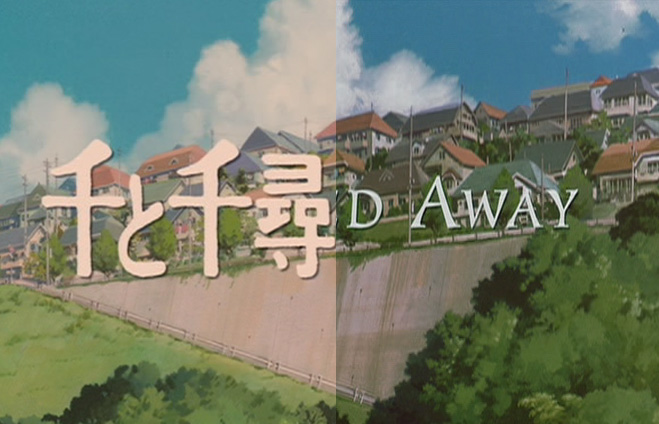
  • Red tinting on the Japanese Spirited Away DVD release (English article, image)
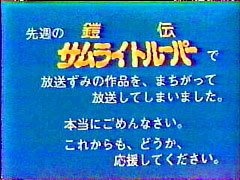
  • TV Tokyo pushes back Inukami episode due to world table tennis championships running long, man who set his recorder to automatically tape Inukami during the normal time slot sends cremated remains to TV Tokyo in protest (article)
  • Episode 26 of Animentary Ketsudan, a right-leaning 1971 historical anime series where the first 25 episodes are about important decisions made during World War II, becomes an episode about Kawakami Tetsuharu’s decisions as the manager of the Yomiuri Giants. Apparently the episode was originally going to be on the final days of the war, but mounting pressure by parent groups over the program’s politics lead to the change.
  • Nippon TV, Tatsunoko Pro, and Kuri Ippei are sued by Katsukawa Katsushi over claims that they plagarized his character design in their show Doteraman, temporary pulling the show from the airwaves. (Katsukawa would later lose the suit)
  • Incredible scheduling botch when TBS tries to push Ichigo Mashimaro ep 5 back by 5 minutes in order to air a special live news report on a hurricane. (youtube)
  • Broadcasting error on 8/15/2007 leads to a 65-minute long frozen frame of Sanji’s eyebrow (One Piece) on one channel. Japanese
  • The Musashimaru Tragedy
  • Episode 17 of Samurai Troopers is accidentally broadcast in lieu of episode 18, forcing the production company to shorten the show from 40 episodes to 39.(image)
  • The staff of the Prince of Tennis anime decided to make a staff doujinshi of the series and sell it at summer Comiket 2004, but are forced to give it away for free when the original author takes notice. (scans on nico)
  • Spanish terrestrial broadcast TV channel “La Sexta” airs ero-anime Daiakuji without actually knowing what it is, causes general moral outrage
  • The ending of Might Gaine, where the characters find out that the ultimate enemy is actually Takara and other toy companies. (No really, I’m not kidding)
  • The opening credits of episode 11 of City Hunter 3, broadcast on Christmas Eve 1989, featured a one-frame flash of Aum Shinrikyo leader Asahara Shoko. This was apparently done as an production in-joke, as one-frame insertions like this are present in shows like Urusei Yatsura and Patlabor TV, and there was no backlash at the time. In 1993, Yomiuri TV asked them to remove this for later rebroadcasts as they were afraid that uncredited insertion of living people’s photographs might lead to a image rights issue. However, TBS would later attack Nippon TV over the original sequence during the heated weeks after the Aum sarin gas attacks, saying it was a subliminal message. (Image here, video footage of an indescribably bizarre cult-recruitment tool/Aum video game which features a clip from the video here.)
  • Not in the thread, but related to the above 2 entries: The 6th show in the Yusha/Brave series, The Brave of Gold Goldran (Might Gaine was show #4), had a one-frame flash in the opening credits of the first 13 episodes where, in the background of a scene where the titular robot could be seen, the phrase “An anime that’s easy to make toys out of / by Sunrise” can be seen handwritten in the background. Oh, those crazy disgruntled Sunrise animators! You can catch it at around 1:12 of this video.