A Good Week for English-speaking Doujinshi Fans: ABe, Strike Witches Doujins in English!

Posted on August 22nd, 2008 at 4:16 am by kransom

I’d spend more of this entry talking about the newly-available doujins by Yoshitoshi ABe now on the iTunes store for the low price of $5 or something, but that’s been around forever, and I have a feeling that anyone who bothers to read this would also have the time to read ANN and their article on this so I’ll just say that you should really go ahead and buy it if you’ve already gone and dropped hundreds on Apple hardware. The translation isn’t really top-notch but that’s the price you pay for getting the doujin 90% cheaper than second-hand price, I guess.

The second piece of news seems a little more fresh: After opening up my goodies acquired from today’s trip to Akiba, I was unexpectedly greeted by a full English translation of the manga portion of Strike Witches: The Witch of Africa/Witch in Africa (Japanese article here). If you’re too lazy to click those links, this has some fairly big names working on it, like the Godfather of Mechamusume himself, Shimada Humikane, Takeshi Nogami, and apparent military nut Suzuki Takaaki, and it’s all translated by Dan Kanemitsu, a REAL TRANSLATOR! Unfortunately, some lines are botched in a way that make me think that a Japanese guy went back over the thing and threw some crap in there (“Gentlemen! What are doing?!”), but it’s still worth the 1200 yen, and Toranoana still seemed to have big stacks of em’ if you want to pay up (which you should do if you love girls with no pants!!)

C74 day 2: shame

Posted on August 16th, 2008 at 6:00 pm by kransom

After 5 hours in the brain-melting heat, I was forced to retreat from Ariake, a defeated man. A combination of long hair and my body’s extraordinary ability to retain heat caused, as happens so often in this country, my mind to say “yes” while my body screamed “no”, and before I knew it (somewhat literally, I think I had multiple OBEs in line for one thing or another) I was on the monorail back to air conditioning and a futon to pass out on. Since I’ll I’d probably manage to get today is ABe’s stuff and a handful of maniac doujins that would get me arrested in at least eight states, I think I’ll hold off until fuyukomi where I will likely be far more successful.

;____;

c74 observations part the first

Posted on August 15th, 2008 at 3:49 am by kransom

Quick notes before I go lie down and try to tie my hamstrings back together:

*Wonder Festival ruins everything – 75% of the escalators were out of comission, including the ones connecting the upper and lower levels of the east halls, and quite obviously the 1f-4f escalator in the west hall (the one that broke), which all had these 8 foot tall barriers blocking them off, lest someone breaks their leg on an immobile escalator. Thankfully some of the west hall escalators actually worked (main hall to 1f, 4f to main hall) but there were lots of guards yelling at you to leave space between you and the person in front of you. All in all, even worse crowds, and it’s only day one.

*Industry area smells like week-old gym socks, and it’s only day one.

*Japanese women are, in fact, capable of sweating.

*Don’t take friends that are violently allergic to pork to Chinese restaurants, no matter how hungry you may be.

*For some reason, the only way in and out of the East halls were the East-2 door and the East-5 door. I forget, is this normal?

*Maritan’s tagline this time around is very apt: 「この温気、ニオイ。。。ベトナムを思い出すぞ!」 or roughly “This heat, this smell… brings me back to ‘Nam!”

Taking it relatively easy tomorrow – doing the first monorail over from Shimbashi tomorrow, lining up for east hall all because of Ueda Hajime and then running over to west to try to grab things before everything half-decent sells out, hopefully everyone will be in Zun’s line instead of buying things that you can’t buy at every store ever

C74 day 1

Posted on August 15th, 2008 at 12:51 am by kransom

Today I exchanged a few hundred calories, a couple thousand yen, and my childish naivete regarding what the words “hot” and “uncomfortable” mean for a small number of Rozen Maiden coterie magazines of fairly high quality.

I have returned from my travails a changed man, one who now understands the cruelty and oppression that late capitalism inflicts upon the bourgeoise.

Returning to the fray tomorrow, don’t know if I will return unscathed. Tell my family (and Souseiseki) I love them.

Instant Manga Reviews: Melty Blood and The World’s Best Surgeon

Posted on August 13th, 2008 at 1:26 am by astrange

I caught something at Otakon and I’m still feeling kinda bad, but I’ll try to get enough power to write it up by listening to No Border on repeat (although kransom and others pretty much got all you’d care about). Meanwhile, here’s some stuff I meant to post about ages ago.

Melty Blood, Takeru Kirishima/TYPE-MOON, 2006-ongoing (from the moon)

Man, don’t TYPE-MOON adaptations suck? Kara no Kyoukai is some good stuff, but everything I’ve seen out of Tsukihime and Fate/stay night has been completely forgettable at best. It’s usually because of their apparently editorless writer Nasu Kinoko’s scripts, which are thousands and thousands of pages, an endless sea of complete bullshit (but we love him anyway). Throwing enough words away to get a decent pacing is tough, and this manga definitely didn’t try hard enough – Melty Blood is supposed to be a fighting game, and I only count about four short hand-to-hand fighting scenes in the first two volumes. But that’s probably not the point anyway. This manga isn’t about fighting, it’s about tsundere fanservice. Pretty much every scene so far contains a girl trying to lecture/kill Shiki and then immediately complaining about how they can’t be honest about their real feelings, and the artist draws weird facial expressions all over the place. Highly recommended if you’re a fan of tsundere/crazy girl moe, otherwise you might want to stick to Airmaster. You’ll also need a better sci-fi vocabulary than me, although I think I saw some only-kind-of-bad translations.

akiha-tsun.pngakiha-dere.png
Seriously, it’s all like this.

Saijou no Meii (The World’s Best Surgeon), Takashi Hashiguchi, 2008
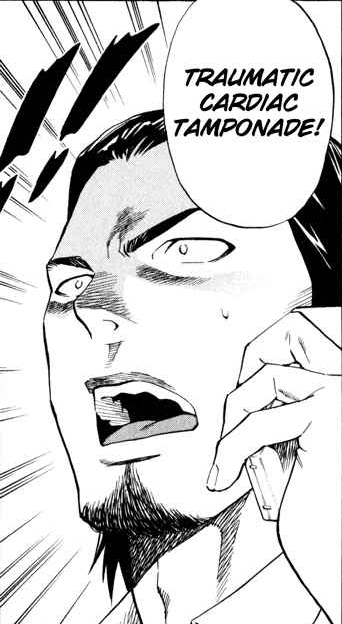
When I started reading manga a few years ago there was one called Yakitate!! Japan, which was a shounen competition manga about becoming the world’s best bread baker. This is a manga by the same guy about becoming the world’s best pediatric surgeon. At this point you should be convinced – I haven’t read more than one chapter so I can’t say much else yet.

tct.png

Jam Protakon report

Posted on August 10th, 2008 at 5:08 pm by kransom

day 0: starcraft videos, hooters with the internet

day 1: jam project Jam Project JAM PROJECT

day 2: jam project Jam Project JAM PROJECT

day 3: go home

great con, but it felt a little short. another hello to all the cool guy internet anime bloggers I met there, you know who you are.

C74 day/genre changes

Posted on August 5th, 2008 at 1:01 am by kransom

But first, erratum: I have been kindly informed that Me & The Devil Blues is being put out by Del Rey, not Viz. I’m not quite sure how I made this mistake, but it could have to do with the fact that the only other Del Rey book I have considered buying is Genshiken. Good on them!

Anyway, I’m probably the last person to notice this that would even care, but I’ve just now gotten around to looking through the C74 catalog, and I was totally thrown off when I noticed that doujin games were moved to day 2 (actually, I first noticed this when looking at astrange’s fantasy c74 pdf but whatever). After a few seconds of googling, I found this handy website which explains all the changes made to what genres go to what day. In short, instead of the old
Day 1: General
Day 2: Girls’ day
Day 3: Boys’ day + Doujin Soft/Music layout, it’s now going to be

Day 1: Girls’ day
Day 2: General (anime/games, mostly non-porn) + Doujin Soft/Music
Day 3: Boys’ day, original works

Just a warning to any of you brave souls that are thinking about doing Comiket without checking a catalog first! Now to decide if I want to tackle east or west hall on day 2 first :/

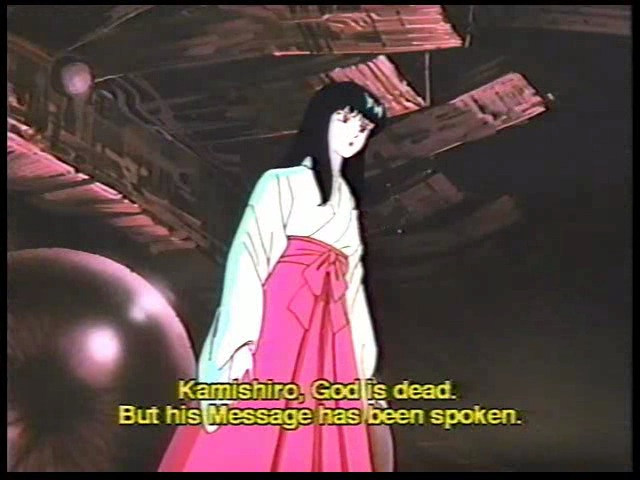
Crystal Triangle is the best anime

Posted on July 26th, 2008 at 3:37 am by astrange

god-died-30-seconds-ago.jpg

Too bad there’s no good way to get it these days, so you’ll just have to read this.

Instant Manga Reviews: Mononokemono, Me and the Devil Blues, Amawresu Kenchan

Posted on July 21st, 2008 at 2:58 am by kransom

Getting some stuff out there before I clean it off my desk and shelve it in the black hole known as my room.

Mononokemono, GotsuboxRyuji, vol 1 (2007)

When Ibuki returns to his home town for his grandmother’s funeral, he discovers that he has been chosen as her successor as a mononokemono, a human that mediates between the world of humans and mononoke, mythological Japanese creatures that make great story fodder thanks to their wide variety and volume. Grudgingly forced into the position, he balances the challenges of being a junior high student with his newfound duty of keeping the mononoke in check. While it sounds like a fairly potboiler story, I found myself enjoying Mononokemono quite a bit. The art style stands out most immediately, as it blends quite a bit of sketchy manga shorthand (almost reminding me of Japanese flash anime), used to match its overall light-hearted mood, with some more solid talent, all done in a very limited black and white palette. Gotsubo’s treatment of mononoke is also worth paying attention to if you have any familiarity with that, as he does both modern takes on old creatures, like a mascot character-style nue, while also inventing his own beasts, like the kireru 24-sai, roughly translated as “24-year old flipping out”. It all adds up to a humorous, somewhat strangely attractive volume, and I’ll be going back for more.

Ore to Akuma no Blues (Me and the Devil Blues, Eng version out July 29 by Del Rey), Hiramoto Akira, vol 1 (2005).

Anime and manga have never been the best when it comes to portraying racial and ethnic groups that aren’t, well, Japanese. As a result, I was a little skeptical when I picked up Me and the Devil Blues, but had heard nothing but praise for it, and thankfully I am able to echo that praise. Me and the Devil Blues is a fantastic re-telling of the life of the legendary blues musician who, as said legend has it, sold his soul to the devil in exchange for his blues chops. The Japanese volume one gives us the devil story as well as the foundations of a story about Johnson’s (fictional) adventures with Clyde Barrow. Both the detailed story and art is dark and dense yet also sensitive, forgoing what could be easy exploitation for serious exposition, a breath of fresh air after Bob Makihara and Mr. Popo (I had to do it, sorry). I was very excited when I heard that Del Rey picked this series up, as they continue to do great work for manga over here with their Jump Millions, and I plan on doing everything I can to get my hands on the translated first volume ($20 retail, but it’s the size of two Japanese volumes, I believe) once it finally hits our shores, apparently next week.

Amawres Ken-chan, Wakasugi Kiminori, 2006 (one-shot).

I’m sure many people by now are aware of Wakasugi’s most famous manga, Detroit Metal City, which now has an anime adaptation, a work about hilariously pathetic people doing hilarious and pathetic things in order to not appear pathetic. (hilarity ensues.) Ken-chan is really more in the same vein. Nagano Kenpei is an average loser at his high school until he is taken under the wing of Numata Puchokof, a half-Japanese, half-Russian ex-olympic wrestler who teaches at his school, and joins the wrestling club, which is full of horrible losers like him. The manga follows him and his friends in the wrestling club as they try to be less lame and (very unsuccessfully) get girlfriends. I’ll say this flat out: if you don’t like gross-out humor and gay jokes (read: are over the age of 17), you probably won’t enjoy this very much. DMC is saved by its over-the-top obscenity and metal jokes, while any remote strands of interest here, like the whole wrestling thing, are played, more or less, for one-dimensional jokes. (Here is the joke for wrestling: it is kinda gay! A ha ha ha.) I suppose that there is also an appeal in this manga if you love seeing people be absolutely pathetic and walking failures at life, but really, you can get that for free between television and livejournal.

Book (?!) Review: Manga! Manga!, Dreamland Japan (Schodt)

Posted on July 15th, 2008 at 2:10 am by kransom

Fred Schodt, Manga! Manga! The World of Japanese Comics (1983), Dreamland Japan: Writings on Modern Manga (1996).

I’ve had these two books lying around for quite some time now, and it seems like now would be a good time to break my trend of posting reviews of things that the majority of this blog’s audience can neither read nor purchase easily. First up is Manga! Manga!. The book is broken into a number of sections, each with a fairly concrete subject, such as the origins of manga, themes in boys’ and girls’ manga, the industry, the future of manga, and a few more things in between, all in a little under 160 pages. You might think that this would result in a fairly scattershot approach to the monolithic subject of everything manga, but we end up with a fairly concise but focused set of essays that would be a good introduction to the subject. The book’s second half is devoted to English translations of four comics, Osamu Tezuka’s Phoenix, Reiji Matsumoto’s Ghost Warrior, Riyoko Ikeda’s Rose of Versailles, and Keiji Nakazawa’s Barefoot Gen.

Well, a good introduction other than the fact that the book is 25 years old. This isn’t exactly a fair criticism, but while the book may have been very poignant at the time, a lot of the ideas floating around in Manga! Manga! didn’t age terribly well, since the American landscape for the stuff was totally different, as the second-to-last paragraph makes it clear – “Most Japanese comics are unlikely to cross the cultural barrier between East and West in their original format. Those that do will probably be select classics with universal themes or works specifically created with Western audiences in mind. They are unlikely to become as common or as dominant as American comics once were.” Also, the whole bubble bursting thing took the idea of “JAPAN TAKING OVER THE WORLD” out of everyone’s heads right quick. Can’t win ’em all, I guess. Despite the disconnect between then and now, there’s still a fair bit of useful information in here, especially when Schodt takes a look at the industry or recent history of the format. Of course, a bit of this is presented as totally alien stuff (as it ought to have been), but between Schodt’s access to Tezuka and the Japanese industry at the time makes for at least a few chunks of very good reading.

Of course, that isn’t to say that I can unequivocally accept everything he presents here. Within a handful of pages, I saw the first claim that made the Japanese studies undergrad in me squirm – that one reason for the dominance of comics in Japan is Japanese kanji, making an ideogram -> pictures -> comics!! connection, an idea that would earn me a mountain of red ink and a referral to this book by a college professor or two. I had similar reservations about his ideas that manga can be traced back as far as 12th century scrolls and (probably unfairly) his sections on samurai and honor influencing more modern-themed works like Golgo 13. (gotta get back to the duke. always gotta get back to the duke.) Actually, Henry Smith does a much better job of pointing this out in his review of the book in Vol 10 #2 of the Journal of Japanese Studies, which you should just read instead of this part of this blog post if you have jstor access. Too bad I told you that now, since I’m just about to wrap up! (It’s not too late to see Smith bust out his otaku cred by talking about gekiga and his Garo collection in the article, though!)

Overall, I’m not all too sure who to recommend this to. I mean, these days we have things like the internet to tell us about manga history, while a good portion of the rest of the book is either outdated or clashes too strongly with my ingrained ideologies for me to appreciate. Not to mention that the only people who I would have the opportunity to recommend the book to would have probably learned a lot of the stuff in here through it being dispersed into general nerd knowledge over the past 25 years. At the same time, it’s a fairly engrossing read, and actually has a fair bit of authority behind bits of it. (Which is to say I enjoyed it a lot more than Samurai from Outer Space which I will not rag on but will simply say that the most I learned from it was that someone out there with a Stanford education actually took Crystal Triangle seriously.) I’d certainly buy it at the $5 Amazon price if you had the bookshelf space, especially if you want a hard copy of something to cite, and I wouldn’t tell someone not to borrow and read it if their local library had it, but I’d suggest reading it with a grain of salt.

On the other hand, there’s Dreamland Japan, which will get a much shorter review from me because I love it so much that I will not write a single bad word about it. Also, I need to sleep soon. Where Manga! Manga! had things like opinion and theory (which I inexplicably hate all of the time especially when it comes from jerks like me), this sucker has big chunks of information to jam-pack your tiny otaku brains with. The first two chapters start off with a overview of the medium as well as its discontents (otaku, comiket, aum cultists). Schodt then moves on to an overview of a fair number of popular manga anthologies of the time, including demograpic and circulation information in handy little boxes. While some of the information is, unsurprisingly, a bit dated, a lot of the information holds up while also giving a pretty clear, in-depth snapshot of the state of the Japanese industry at the time.

This alone would make it worth a purchase, especially at the dirt-cheap prices that you can find it online, but then we get a hundred-page chapter that focuses on various manga artists of note. Schodt’s writing keeps things fresh as he profiles (and includes samples!) of one artist after the next, leaving a host of dogeared pages in any underinformed reader’s (my) copy of the book with mental notes to check the artists out once you’re done with the book. The next chapter is about Tezuka, and to be honest, I just thumbed through the chapter since nearly all of it was included in Schodt’s later Astro Boy Essays, which AWO’s Daryl Surat did a nice little review of in Otaku USA. (spoilers: you should buy it.) The final two chapters are on the future of manga, first in Japan, then in America. Again, being ten years old on a subject that’s constantly experiencing an incredible amount of change hurts these chapters’ relevancy a little, but they still provide a great picture of what was going on at a time that we can’t easily hop online and pull up websites about. Also, you get to see an absolutely ancient picture of the absolutely ancient Anipike, which should bring a smile to any old codger’s heart. So yeah, I would strongly suggest anyone interested in the history of manga or just manga in general pick up Dreamland Japan. It is both an engrossing read and will probably make you more informed about Japanese cartoons, an important trait of every educated citizen of the world!