Archive for the 'review' Category

Review and Complaints: Magical Girl Lyrical Nanoha A’s DVD box

Friday, January 23rd, 2009

Instant review: Nanoha A’s is one of the best otaku-exploitation shows ever, featuring explosions, Starlight Breaker, German-shouting magical girl weapons, and charming and pleasant plot holes you could drive a truck through. I’m not sure how this happened considering how bad the other two Nanoha series were. The DVD box is $30 and I guess you should buy it, unless you’re tired of every post on here being about buying stuff or something.

That said, I watched the first DVD, and they ended up doing really low quality work. Apart from having a dub, the fansubs are probably better in every way.

Video – Maybe because they stuck 5 episodes on one DVD, the bitrate goes really low at several points and it artifacts really badly. I don’t think you’d notice unless you were me/Defiler/Fluff, though, but I only have two other DVDs (KareKano, which has an excuse, and Haruhi, which doesn’t) that have noticable artifacts this bad.

Audio – is worse; the first episode is in mono, of all things. Apparently they switched mastering studios and the new one loves to randomly hit the wrong checkbox in their encoders or something. This pretty much makes the OP/ED sound terrible but doesn’t really affect the important part (EXPLOSION!). Maybe they’ll release fixed DVDs, but since they have no money I wouldn’t hold my breath. It’s fine after that episode (excellent panning across the forward soundstage etc.), but I think the other two DVDs might have the same problem.

Translation – is really literal; it looks like it was edited, but not by someone who knows what a bad Japanese translation looks like. A bunch of metaphors are translated literally, resulting in lines that only kind of make sense, and a few lines are weirdly overspecific to the point of actually being mistranslated.

Ep 1, DVD on left/fansub on right:
n1-dvdn1-sub
(note: I am bad at matching the same frame, oh well)
n2-dvdn2-sub
Nanoha’s “Listen to me!” before using her Energy Beam of Friendship is subbed as “Listen to what I have to say!”, which usually would be ok but in this scene makes it look like a threat or something. Admittedly it makes the scene better than it actually is, but it’s totally not justified by the real line.

After ep 1 it gets better, but it still seems below good fansub/average retail quality.

Ep 2:
n3-dvdn3-sub
Not a translation problem, and optic yellow is great and all, but can we please not use it in digital animation when characters have the same color hair as the subtitle text?

n4-dvdn4-sub

Ep 3:
n5-dvdn5-sub
“saki” (the “just” in “I just…”) is translated as “moments ago” in another line too.

This is kinda surprising since usually retail DVDs seem pretty well-done to me. Manga is another story.
Also someone gave me a Nendoroid Miku and I can’t figure out how to put the stand together.

Manga Review: Bakuman。 vol 1

Thursday, January 22nd, 2009

I realize I’m quite a bit behind the times on this review, but I have this horrible habit of paying money for my manga, especially anything that I review :(

Anyway, Bakuman。. Yes, the title includes the crazy Japan period 「。」 but I’m not going to use it anymore because I don’t like IME-swapping every 5 seconds. Illustrated by Obata Takeshi and written by Ohba Tsugumi, and first released in tankobon form on the 10th of this month. Now, some of the more perceptive blog readers out there will have read that last sentence and thought, “hey, that’s the talented tag-team behind Death Note!”, and those readers would be absolutely right. I have to admit that I didn’t get very far into the DN manga and didn’t watch anything other than the anime’s OP/EDs, so I won’t be talking much about that. Like DN, Bakuman runs in Shonen Jump. This is important for reasons that I will expound upon in a paragraph or two, but keep this in mind.

I’ve heard a lot of buzz, both positive and negative, about this title both from Actual Japanese People as well as some folks on the internet. My first reaction was that this buzz was simply because it was “FROM THE CREATORS OF DEATH NOTE“, but after actually bothering to listen to people and decode moonblog posts, I realized that before “FROM THE CREATORS OF…” there was an equally important “A MANGA ABOUT WRITING FOR JUMP” present.

The basic plot of Bakuman so far is pretty straightforward: disaffected highschooler Mashiro Moritaka (真城最高) doesn’t know what he wants to do in life, until brainy stud Takagi Akito (高木秋人) convinces him to partner up and draw manga together. Now, Bakuman isn’t published in some lame serial for boring people, so they set their eyes on the highest prize out there: a series serialized in Shonen Jump and a tv anime to boot.

Woah, meta.

We also read about Moritaka’s (called Saikou by Akito for reasons clear to anyone who would bother caring) uncle who had his own fairly successful manga with its own anime adaptation until he died, presumably from overwork, and his continued influence over Saikou’s life. There’s also a romance plot for each main character to round things out, including Saikou’s hilarious agreement with his girlfriend that they won’t talk to each other until he gets an anime adaptation and she becomes a famous seiyuu. Then they’ll get married.

Other than the obligatory romance subplot, Saikou and Akito, (called Shuujin by Saikou,) work their butts off until, by the end of the first volume (chapter 7, for those of you who for one reason or another read chapter by chapter) they’re ready to show a manuscript to an editor at Shueisha. Some of you might be thinking that this is yet another ridiculous part of the plot, but this is where, as far as I know, you are at least somewhat mistaken!

You see, a lot of Bakuman is spent in one way or another talking about how absolutely awesome the cultural institution of Shonen Jump is, and one of the many absolutely awesome parts of Shonen Jump is how open they are to submissions from total unknowns, to the point where it is considered one of the “easier” majors to get published at for folks looking to get their foot in the door. One of the big reasons for this is because above all else, Jump is a populist magazine, sometimes ruthlessly so. As pointed out in the first chapter, if the reader surveys come back saying that folks like you, you stay on, but otherwise you can find yourself back on the street in 10 weeks or even fewer, and with Shueisha’s contracts, it can be very hard to find work elsewhere. By the way, folks, this is the same survey that cancelled Barefoot Gen in 14 weeks. On a side note, I’m counting 13 new series that started in Jump in 2008, 7 of which have already been ended. 6 of the cancelled manga were drawn by manga-ka whose only other work has been similarly minor one-shots and the like in one Jump or another.

I imagine that this populism plays into the characteristics of the twin protagonists: so painfully teenaged that similarly-aged boys will nod their heads in agreement with everything that they say, younger boys will look upon them as way-cool heroes, and adult boys will look at, see younger versions of themselves, and let out a deep sigh. I’m not sure what girls will do with them other than be offended and possibly draw slash fiction.

Honestly, the amazingly shonen attitudes towards women in Bakuman harken back to the glory days of 80s-90s Jump, before the proliferation of what Daryl Surat would call “Neo-Shonen” took place. I mean, Saikou’s mom is against the idea of him doing this manga business, but his father intervenes, stating that women can’t understand the manly dreams of men. That’s like taking a page right out of Captain Harlock’s book or something! I’m half-expecting Rei (Nanto Seiken Rei, not that other one) to bust in on a scene and rip off some girl’s shirt just for the hell of it! Even the way the women, especially Saikou’s love interest and her mother are drawn also remind me of Katsura Masakazu‘s girls. It’s like its grabbing you by the neck and screaming “Remember when boys used to act like boys in Shonen Jump, and how, on occasion they still do? Isn’t that awesome!??!”

The relationship between the two protagonists is basically a Jump take on the pair in Fujiko Fujio Ⓐ’s Manga Michi (somewhat referenced on the back of the first tankobon), which is to say that both the nature of their relationship as well as their characteristics if you take the Death Note-style Chuunibyou out of it is based on the famous “Hard Work, Friendship, and Victory” (努力、友情、勝利) combination that Jump takes to be the driving force behind their editorial policy. Words that were, yes, decided by reader survey. Honestly, it’s refreshing to see something so exceptionally and transparently Shonen Jump, especially by the guys behind Death Note, which didn’t seem very SJ at all.

Of course, Bakuman also references other Jump titles explicitly, again in what seems to be a (successful, for me) bid to extol the greatness of Shonen Jump throughout the years. The creators very cheaply reference themselves at first (“I heard the creators of Death Note once say…”) and also pay some equally cheap but sincere lip service to other greats (“We’ll never be the #1 manga-ka in the country, there’s already One Piece and Dragonball out there!”), but later move on to some shout-outs to some older greats, and a basically unknown manga by the tag-team behind Kyojin no Hoshi plays a fairly central role in a later chapter. Of course, all Shonen Jump titles.

One last thing before I wrap this ridiculously long post up: Takekuma-san noted in a great post that Jump’s presence is present even down to the way that the two produce their manga, in that the author of the manga draws the rough manuscript (Name/ネーム) and then has the artist draw from there. Apparently, until the mid-90s this was exceedingly rare, as the artist would normally handle the Name unless the author was an experienced manga illustrator, but who lead the way in this new division of labor?

…Take a guess.

Of course, as he mentions, this is much more common these days, but to have the artist say “I liked your Name so let me do the drawing” seems very strange, as normally there’d be some sort of deliberation. In fact, as you can see in between each chapter in the volume, Obata makes a fair number of changes to Ohba’s Name, not to mention that Ohba might be a veteran Jump illustrator himself, depending on who you believe. Either way, it’s an amusing note to see what might be an extra little bit of Jump propaganda snuck in there.

While I’m sure most of the folks out there who would want to check this out because of the two authors’ previous work had their minds made up before they even read this review, but I’d suggest taking a look at Bakuman。 even if you’re not a fan of the duo, especially if you have feel any sort of connection to Shonen Jump or if you’re interested in manga about manga in general. I’m looking forward to volume 2, which I assume will be out fairly soon, if it’s only 7 issues a volume.

Edit: oh, holy crap! Bakuman for free! In English! Legally!!

Manga Reviews: Boku no Shokibo na Seikatsu, Yumewatari no Pulcinella, Fushigi no Kuni no Ringohime, JC.COM (all vols 1, some reviews may be instant)

Tuesday, January 20th, 2009

In my futile attempts to get myself to post blog entries more often, I tend to leave manga sitting on my computer desk or on the floor below my desk until I either do one of my massive twice-a-semester room cleanings or one of my twice-a-semester manga reviews. Okay, maybe more like once a semester.

Boku no Shoukibo na Seikatsu (僕の小規模な生活), by Fukumitsu Shigeyuki (福満しげゆき). Vol 1 published 12/21/2007. Kodansha/Morning.
51xdkagvial
Boku no… is a semi-autobiographical story of a man struggling to break into the manga industry. It was also one of the most depressing things I read last semester. The story starts with the main character trying to balance making enough money through part-time jobs to supplement his wife’s pay in order to survive with his hopes of becoming a professional manga-ka. Throughout the course of the volume’s 25 chapters, he somehow manages to work his way from being rejected by eromanga publishers to getting serialized in a major (guess which one it is!). This, of course does not stop him from losing sleep in chapter after chapter over his various arguments with his wife (who gradually gains weight over the course of the volume–she seems to be a fan of the idea of comfort food) over small things which generally end with her getting violent, his social slip-ups, his thin finances, his fragile position as a professional manga-ka, and life in general being rough. We follow the main character around to his various meetings with editors and industry folks, his attempts to start a band with a friend, and basically every part of his often-miserable, but slowly proceeding life.

This is actually somewhat of a continuation of Boku no Shokibo na Shippai, which ran in AX (ps buy this when it comes out), and we actually see some of the process behind Shippai being created in this volume. What struck me most about this manga is how much I actually cared about the main character’s life. I felt miserable when he felt miserable, and I shared in his (often small) successes, but always carefully. The look at the interaction between him and his editors was also great to read from the position of someone interested in how the industry works, and I’m definitely going to pick up volume 2 whenever I get around to going to a real bookstore.

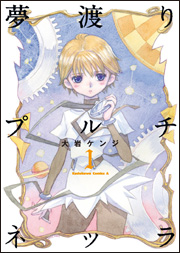
Yumewatari no Pulcinella (夢渡りのプルチネッラ), by Oiwa Kendi (大岩ケンヂ). Vol 1 published 8/26/2008. Kadokawa/Shonen Ace
200805000034
You know, I need to study for a quiz tomorrow so all I’m going to say about this is that if Oiwa Kendi illustrating NHK and Goth made you think he was unable to whip up a boilerplate school romance/fantasy story (boy in boring school life goes into mystery inner-soul dream world and meets cute girl and sexy girl who vie for his attention while with their help he goes into other peoples inner-soul dream worlds and fixes their problems, etc etc etc) when he’s all on his own, you are sorely mistaken. I am one of these sorely mistaken individuals, especially sore since I had the exact same reaction after buying both 99 Happy Soul AND Mahiru no Yojimbo. Maybe this time I’ll learn?

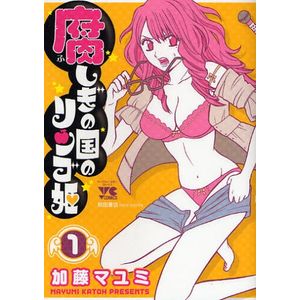
Fushigi no Kuni no Ringo-hime (腐しぎの国のリンゴ姫), Katoh Mayumi (加藤マユミ). Vol 1 published 4/20/2008. Akita Shoten/Young Champion.
7andy_07198418
Rin is the top OL (office lady) at her company, jealously looked up to by the other women at the company on the track to marrying the soon to be rich alpha-male salaryman at her company. She also happens to be a fujoshi crazy about “Salaryman Ojisama”, and succeeds in keeping the two worlds separate from each other until a new girl shows up at the office, amusingly enough nicknamed “Moemoe”. Moemoe knows Rin from her junior high days of being a fat Salapri-obsessed fujoshi, and leverages this blackmail into a number of amusing yet now-stock situations like making her dress up like a street idol and have dudes wotagei to her songs, and of course going to a doujin event. If you had to know, there are also jokes about her only knowing about sex through extensive knowledge of yaoi and apparently Chobits.

I’m kind of conflicted about this manga – on one hand it did keep me reading for the most part, and got a few good laughs out of me. On the other hand, if you didn’t particularly like Mouou Shoujo Otaku-kei because it was a little too geared towards guys (I mean it ran in High and they run Kojika), you will probably have an aneurysm if you read this. I mean, it runs in a magazine with “Young” in its title. In other words, lots of breasts, and enough fujoshi stereotyping and borderline misogyny to even give me pause. I mean hell, at one point there is what is very close to one of those “girl gets raped, but you know she was asking for it” kinds of scenes. I might end up buying volume 2 hoping that it’ll manage to turn around, as it certainly could play off what’s been established in volume 1 to create a story that would allow the liberal arts major inside of me to recommend this, but until then approach with caution, I guess, especially if you haven’t bothered reading 801-chan or Mousou Shoujo yet or something.

JC.COM (Serial, Shueisha, 12/19/2008).

978-4-08-782196-3
I saw a little of hype over this one here and there, and figured that I’d pick it up since I assumed that Range Murata cover and niche-sized anthology would mean that it’d be up my alley. Again, Japan has fooled me. This is mostly my fault, as I didn’t bother to actually read most of the hype beyond headlines, and so I didn’t notice the “From the artist of Highschool of the Dead” and the “From the creator of Chocotto Sister” and the “boobs from some guy who did a few series for CoroCoro”. So yeah, mostly girls or women in various states of undress and lots of fightin’ action. Not that there’s anything particularly wrong with that, and these all seem like perfectly competent series, it’s just that I had something a little more…pretentious in mind when I dropped over 800y on under 200 tankobon-sized pages with Murata drawing his signature young girls for the cover (amusingly titled The Muses of Range Murata). Oh well, there’s always Gelatin coming out next month, I’ll be prepared for the absolutely exquisite filth in that one.
Review: Akiba Days

Saturday, November 8th, 2008

I’m sure most of the readers of this blog have already been exposed to Akiba Days, the illustrated guide to Akiba featuring the cast of School Days. I didn’t pick it up at first since I figured that knowing about where stores are and which places are interesting was one of those things you could just do on the internet. I was humbled a few weeks later as I got embarrassingly lost trying to find an out of the way maid cafe and the guy I was with whipped out Akiba Days, flipped to the index and found the place in about 15 seconds. I ended up buying a copy later that day, though for full disclosure, half of the reason I bought it was so that I could hit 6000 Toranoana points so I could get some Touhou vinyl figures.

So anyway, Akiba Days is a fairly comprehensive index of all the various stores in Akiba. Each store entry has a short, generally 2-4 sentence entry describing the place, a sentence commenting on the place by someone from School Days, maybe a few pictures, and address/map/hours/phone#. The stores are broken down into 4 categories, Eat, Play, Relax, and Buy, and they’re each broken down into subsections (ie curry, ramen, maids; video games, karaoke, maids; net cafes, massage parlors, maids; pc parts, video games, maid outfits, respectively). There’s also a 15-page map section in the front with an index of all the stores in the back, which is really handy when you’re trying to find stores hidden in the basement of a back street alley software store. There’s also a few small articles and infoboxes spread out through the book, like where the cheapest net cafe to spend the night at is in Akiba (1080jpy for 6 hours!), where to park your car (hah), or good date courses (HAH), though the book gives fairly ridiculous advice on these date courses like “Cure Maid Cafe -> Cos-Cha -> Mailish”.

Of course there’s the issue of stores lasting for an average of like 18 months in Akiba, especially with the mass maid cafe extinction thats going on right now, so I’m hoping for periodical revisions, since this thing is honestly a great guide to have, even if you do fancy yourself as somewhat of an Akiba vet. However, the book has only been out for a little more than 3 months now, so I think it still has quite a bit of time left on its shelf life, and after that it’ll always be a nice reference to have to see what Akiba looked like in its early post-Kato days. I’m not sure if this is much of a must-buy if you’re a School Days fan, since the characters really do seem to be not a whole lot more than semi-bland window dressing, but I’m not terribly familiar with the game’s characters, so for all I know it’s chock full of hilarious School Days jokes. All I noticed was the part where Sekai seems a little too interested in Akiba’s various sword shops. :x Anyway, it’s pretty reasonably priced at a little over 1300 yen, subsidized I’m sure in part by the back cover Toranoana ad, so if you’re planning on doing Tokyo and Akiba this winter or even as late as next Summer, pick a copy up if you can do the Japanese thing and impress all your other gaijin friends with your newly-found encyclopedic knowledge of Akiba!

So yeah, all in all,

Nice Mook.

instant review: some crap I bought because akibablog and zepy talked about it

Saturday, October 25th, 2008

mangas

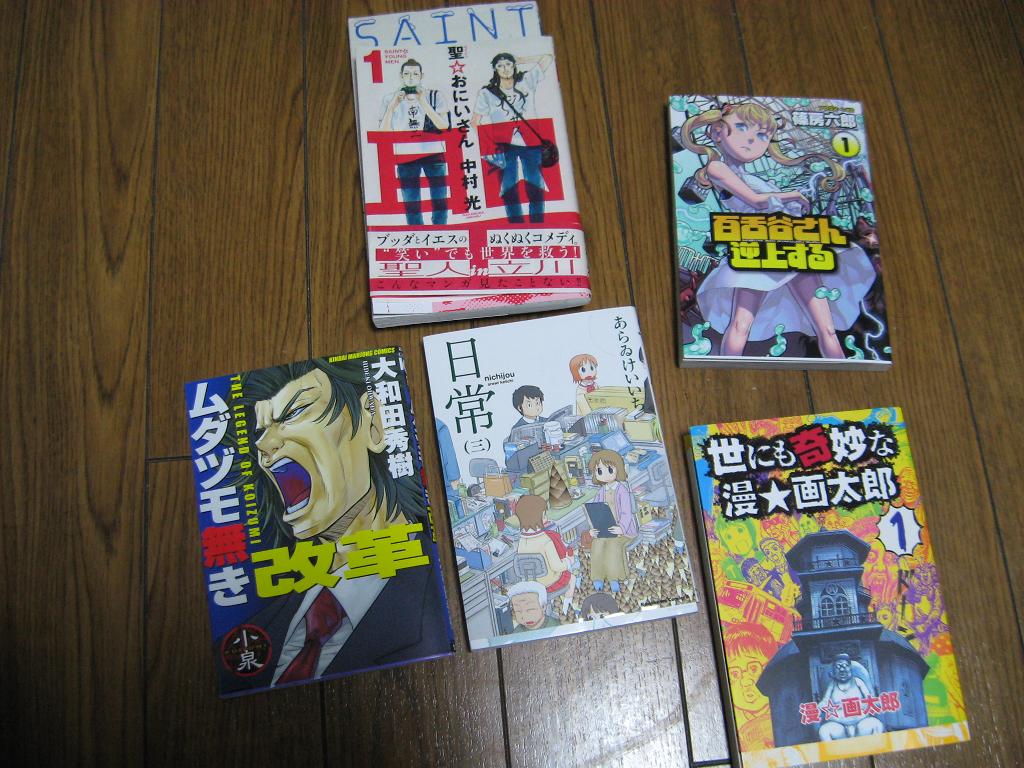
Saint Young Men, Nakamura Hikaru (Kodansha/Morning 2), vols 1+2 – Jesus and Buddha come back to the world as cute bachelors living in Tokyo. That alone is normally enough to get me to drop 552 yen but incredibly enough the execution is pretty spot-on too. The chapters are all pretty stand-alone barring the occasional joke that draws on a previous issue, but generally they are one-shots in the form of “Jesus and Buddha go somewhere normal (amusement park, matsuri, the lake, Akihabara) or do something normal (give each other haircuts, celebrate the holidays, live like poor bachelors), and the jokes just go from there. While the jokes all stem from the premise (Jesus is Jesus, Buddha is Buddha), Nakamura digs deep enough to keep them fresh, quoting scripture and Akutagawa short stories like it ain’t no thang. Artwork is solid but nothing to write home about, but that’s really not why you’re buying this, anyway. This seems to be selling like hotcakes, I’m seeing it on a lot of store special racks and in a lot of maid cafes. (zepy has some pictures for you to look at here)

Mozuya-san Gyakujou Suru, Shinofusa Rokurou (Kodansha/Afternoon), vol 1 – Manga about a small girl who happens to suffer from the recently discovered tsundere personality disorder, written by a professed otaku. I am fairly certain that between that description and this image you will know if you will want to read this manga or get really mad about it running in Afternoon and not something that starts with “Dengeki.”

Mudazumo-naki Kaikaku, Oowada Hideki (Takeshobo/Kindai Mahjong), one-shot – Basically the best manga to have ever been published. Former PM Koizumi solves issues of national diplomacy and security through mahjong. Find out which is stronger, Koizumi’s Rising Sun (Kokushi Musou) Tsumo, or Papa Bush’s Apocalypse Now (half flush Chi-Toitsu) Ron! Can Taro Aso save Koizumi from Kim Jong Il’s sinister plots, or will the Tepo-Dong get the better of Japan? How can you beat a 40 yaku hand? With a 105-yaku hand, of course. I didn’t think that the guy behind Dai Mahou Touge could actually write anything this good, but apparently he can, and Japan seems to agree with me, since this damn thing has had to have three printings in the first month it was out. Anyway, a must-read for anyone into mahjong or who enjoys parody manga in general. (akibablog-san talks about this a lot: 1, 2, 3, 4)

Nichijou, arawi keiichi (Kadokawa/Shonen Ace/Comptiq), vol 3 – I’ve gushed shortly about this manga in the past, though I couldn’t really get into volume 2 when I was reading scans of it, I’m not quite sure why. Vol 3 keeps up the trend of solid gags and impeccable comic timing. Basically, while Saint Young Men’s episodes are basically stories that use new settings to facilitate character-based jokes, Nichijou episodes are giant self-sustaining jokes or buildups to a punchline, which is the style of humor that gets me actually laughing out loud as opposed to smiles and chuckles in the case of Saint Young Men. This is basically on my permanent will-follow list unless it pulls a DMC on me or something.

Yo nimo Kimyou na Man☆Ga Taro, Man☆Ga Taro (Shueisha/Business Jump), vols 1-3 – More gag manga, kind of. I use the phrase “nightmare fuel” cautiously, but jesus christ I should not be reading this at night. Basically it is semi-avant-garde grossout horror gag manga, but all of the humor is either extremely dark or just so twisted that the punchline is “old terrifying wrinkled fat naked woman sprays fecal matter on someone and dies”. I couldn’t really bring myself to enjoy the majority of these stories since they seem to be going for not a whole lot more than pure shock value on a number of levels, but there were a few stories that I did find entertaining – the fourth story in vol 1, “Super Meitantei”, about a young amateur detective who loves detective manga who stumbles upon a horrible axe murderer driven to his obsession by horror manga, seemed especially clever to me (especially the last frame punchline), and more or less got me to buy vols 2+3 on its strength alone, a purchasing decision that I now regret on at least some level. I mean, that money could have been better spent on some Horihone Saizo or something. is apparently getting a moving picture adaptation.

Instant Manga Reviews: Melty Blood and The World’s Best Surgeon

Wednesday, August 13th, 2008

I caught something at Otakon and I’m still feeling kinda bad, but I’ll try to get enough power to write it up by listening to No Border on repeat (although kransom and others pretty much got all you’d care about). Meanwhile, here’s some stuff I meant to post about ages ago.

Melty Blood, Takeru Kirishima/TYPE-MOON, 2006-ongoing (from the moon)

Man, don’t TYPE-MOON adaptations suck? Kara no Kyoukai is some good stuff, but everything I’ve seen out of Tsukihime and Fate/stay night has been completely forgettable at best. It’s usually because of their apparently editorless writer Nasu Kinoko’s scripts, which are thousands and thousands of pages, an endless sea of complete bullshit (but we love him anyway). Throwing enough words away to get a decent pacing is tough, and this manga definitely didn’t try hard enough – Melty Blood is supposed to be a fighting game, and I only count about four short hand-to-hand fighting scenes in the first two volumes. But that’s probably not the point anyway. This manga isn’t about fighting, it’s about tsundere fanservice. Pretty much every scene so far contains a girl trying to lecture/kill Shiki and then immediately complaining about how they can’t be honest about their real feelings, and the artist draws weird facial expressions all over the place. Highly recommended if you’re a fan of tsundere/crazy girl moe, otherwise you might want to stick to Airmaster. You’ll also need a better sci-fi vocabulary than me, although I think I saw some only-kind-of-bad translations.

akiha-tsun.pngakiha-dere.png
Seriously, it’s all like this.

Saijou no Meii (The World’s Best Surgeon), Takashi Hashiguchi, 2008
When I started reading manga a few years ago there was one called Yakitate!! Japan, which was a shounen competition manga about becoming the world’s best bread baker. This is a manga by the same guy about becoming the world’s best pediatric surgeon. At this point you should be convinced – I haven’t read more than one chapter so I can’t say much else yet.

tct.png

Instant Manga Reviews: Mononokemono, Me and the Devil Blues, Amawresu Kenchan

Monday, July 21st, 2008

Getting some stuff out there before I clean it off my desk and shelve it in the black hole known as my room.

Mononokemono, GotsuboxRyuji, vol 1 (2007)

When Ibuki returns to his home town for his grandmother’s funeral, he discovers that he has been chosen as her successor as a mononokemono, a human that mediates between the world of humans and mononoke, mythological Japanese creatures that make great story fodder thanks to their wide variety and volume. Grudgingly forced into the position, he balances the challenges of being a junior high student with his newfound duty of keeping the mononoke in check. While it sounds like a fairly potboiler story, I found myself enjoying Mononokemono quite a bit. The art style stands out most immediately, as it blends quite a bit of sketchy manga shorthand (almost reminding me of Japanese flash anime), used to match its overall light-hearted mood, with some more solid talent, all done in a very limited black and white palette. Gotsubo’s treatment of mononoke is also worth paying attention to if you have any familiarity with that, as he does both modern takes on old creatures, like a mascot character-style nue, while also inventing his own beasts, like the kireru 24-sai, roughly translated as “24-year old flipping out”. It all adds up to a humorous, somewhat strangely attractive volume, and I’ll be going back for more.

Ore to Akuma no Blues (Me and the Devil Blues, Eng version out July 29 by Del Rey), Hiramoto Akira, vol 1 (2005).

Anime and manga have never been the best when it comes to portraying racial and ethnic groups that aren’t, well, Japanese. As a result, I was a little skeptical when I picked up Me and the Devil Blues, but had heard nothing but praise for it, and thankfully I am able to echo that praise. Me and the Devil Blues is a fantastic re-telling of the life of the legendary blues musician who, as said legend has it, sold his soul to the devil in exchange for his blues chops. The Japanese volume one gives us the devil story as well as the foundations of a story about Johnson’s (fictional) adventures with Clyde Barrow. Both the detailed story and art is dark and dense yet also sensitive, forgoing what could be easy exploitation for serious exposition, a breath of fresh air after Bob Makihara and Mr. Popo (I had to do it, sorry). I was very excited when I heard that Del Rey picked this series up, as they continue to do great work for manga over here with their Jump Millions, and I plan on doing everything I can to get my hands on the translated first volume ($20 retail, but it’s the size of two Japanese volumes, I believe) once it finally hits our shores, apparently next week.

Amawres Ken-chan, Wakasugi Kiminori, 2006 (one-shot).

I’m sure many people by now are aware of Wakasugi’s most famous manga, Detroit Metal City, which now has an anime adaptation, a work about hilariously pathetic people doing hilarious and pathetic things in order to not appear pathetic. (hilarity ensues.) Ken-chan is really more in the same vein. Nagano Kenpei is an average loser at his high school until he is taken under the wing of Numata Puchokof, a half-Japanese, half-Russian ex-olympic wrestler who teaches at his school, and joins the wrestling club, which is full of horrible losers like him. The manga follows him and his friends in the wrestling club as they try to be less lame and (very unsuccessfully) get girlfriends. I’ll say this flat out: if you don’t like gross-out humor and gay jokes (read: are over the age of 17), you probably won’t enjoy this very much. DMC is saved by its over-the-top obscenity and metal jokes, while any remote strands of interest here, like the whole wrestling thing, are played, more or less, for one-dimensional jokes. (Here is the joke for wrestling: it is kinda gay! A ha ha ha.) I suppose that there is also an appeal in this manga if you love seeing people be absolutely pathetic and walking failures at life, but really, you can get that for free between television and livejournal.

Book (?!) Review: Manga! Manga!, Dreamland Japan (Schodt)

Tuesday, July 15th, 2008

Fred Schodt, Manga! Manga! The World of Japanese Comics (1983), Dreamland Japan: Writings on Modern Manga (1996).

I’ve had these two books lying around for quite some time now, and it seems like now would be a good time to break my trend of posting reviews of things that the majority of this blog’s audience can neither read nor purchase easily. First up is Manga! Manga!. The book is broken into a number of sections, each with a fairly concrete subject, such as the origins of manga, themes in boys’ and girls’ manga, the industry, the future of manga, and a few more things in between, all in a little under 160 pages. You might think that this would result in a fairly scattershot approach to the monolithic subject of everything manga, but we end up with a fairly concise but focused set of essays that would be a good introduction to the subject. The book’s second half is devoted to English translations of four comics, Osamu Tezuka’s Phoenix, Reiji Matsumoto’s Ghost Warrior, Riyoko Ikeda’s Rose of Versailles, and Keiji Nakazawa’s Barefoot Gen.

Well, a good introduction other than the fact that the book is 25 years old. This isn’t exactly a fair criticism, but while the book may have been very poignant at the time, a lot of the ideas floating around in Manga! Manga! didn’t age terribly well, since the American landscape for the stuff was totally different, as the second-to-last paragraph makes it clear – “Most Japanese comics are unlikely to cross the cultural barrier between East and West in their original format. Those that do will probably be select classics with universal themes or works specifically created with Western audiences in mind. They are unlikely to become as common or as dominant as American comics once were.” Also, the whole bubble bursting thing took the idea of “JAPAN TAKING OVER THE WORLD” out of everyone’s heads right quick. Can’t win ‘em all, I guess. Despite the disconnect between then and now, there’s still a fair bit of useful information in here, especially when Schodt takes a look at the industry or recent history of the format. Of course, a bit of this is presented as totally alien stuff (as it ought to have been), but between Schodt’s access to Tezuka and the Japanese industry at the time makes for at least a few chunks of very good reading.

Of course, that isn’t to say that I can unequivocally accept everything he presents here. Within a handful of pages, I saw the first claim that made the Japanese studies undergrad in me squirm – that one reason for the dominance of comics in Japan is Japanese kanji, making an ideogram -> pictures -> comics!! connection, an idea that would earn me a mountain of red ink and a referral to this book by a college professor or two. I had similar reservations about his ideas that manga can be traced back as far as 12th century scrolls and (probably unfairly) his sections on samurai and honor influencing more modern-themed works like Golgo 13. (gotta get back to the duke. always gotta get back to the duke.) Actually, Henry Smith does a much better job of pointing this out in his review of the book in Vol 10 #2 of the Journal of Japanese Studies, which you should just read instead of this part of this blog post if you have jstor access. Too bad I told you that now, since I’m just about to wrap up! (It’s not too late to see Smith bust out his otaku cred by talking about gekiga and his Garo collection in the article, though!)

Overall, I’m not all too sure who to recommend this to. I mean, these days we have things like the internet to tell us about manga history, while a good portion of the rest of the book is either outdated or clashes too strongly with my ingrained ideologies for me to appreciate. Not to mention that the only people who I would have the opportunity to recommend the book to would have probably learned a lot of the stuff in here through it being dispersed into general nerd knowledge over the past 25 years. At the same time, it’s a fairly engrossing read, and actually has a fair bit of authority behind bits of it. (Which is to say I enjoyed it a lot more than Samurai from Outer Space which I will not rag on but will simply say that the most I learned from it was that someone out there with a Stanford education actually took Crystal Triangle seriously.) I’d certainly buy it at the $5 Amazon price if you had the bookshelf space, especially if you want a hard copy of something to cite, and I wouldn’t tell someone not to borrow and read it if their local library had it, but I’d suggest reading it with a grain of salt.

On the other hand, there’s Dreamland Japan, which will get a much shorter review from me because I love it so much that I will not write a single bad word about it. Also, I need to sleep soon. Where Manga! Manga! had things like opinion and theory (which I inexplicably hate all of the time especially when it comes from jerks like me), this sucker has big chunks of information to jam-pack your tiny otaku brains with. The first two chapters start off with a overview of the medium as well as its discontents (otaku, comiket, aum cultists). Schodt then moves on to an overview of a fair number of popular manga anthologies of the time, including demograpic and circulation information in handy little boxes. While some of the information is, unsurprisingly, a bit dated, a lot of the information holds up while also giving a pretty clear, in-depth snapshot of the state of the Japanese industry at the time.

This alone would make it worth a purchase, especially at the dirt-cheap prices that you can find it online, but then we get a hundred-page chapter that focuses on various manga artists of note. Schodt’s writing keeps things fresh as he profiles (and includes samples!) of one artist after the next, leaving a host of dogeared pages in any underinformed reader’s (my) copy of the book with mental notes to check the artists out once you’re done with the book. The next chapter is about Tezuka, and to be honest, I just thumbed through the chapter since nearly all of it was included in Schodt’s later Astro Boy Essays, which AWO’s Daryl Surat did a nice little review of in Otaku USA. (spoilers: you should buy it.) The final two chapters are on the future of manga, first in Japan, then in America. Again, being ten years old on a subject that’s constantly experiencing an incredible amount of change hurts these chapters’ relevancy a little, but they still provide a great picture of what was going on at a time that we can’t easily hop online and pull up websites about. Also, you get to see an absolutely ancient picture of the absolutely ancient Anipike, which should bring a smile to any old codger’s heart. So yeah, I would strongly suggest anyone interested in the history of manga or just manga in general pick up Dreamland Japan. It is both an engrossing read and will probably make you more informed about Japanese cartoons, an important trait of every educated citizen of the world!

Manga Review: Kuishinbou

Sunday, July 13th, 2008

Kuishinbou, Tsuchiyama Shigeru, vol 1 (2005)

Every once in a while, I hear someone throw out the idea that a certain manga is made specifically for Japanese salarymen as vicarious entertainment. Sometimes the claim made by mistaken individuals in regards to works that simply have universal appeal (Golgo 13, Fist of the North Star) while other times they’re actually talking about works about average 20-30something dudes who, by luck or by pluck, end up doing something TOTALLY AWESOME with their lives, like become a professional pachinko player, a professional mahjong player, or the athlete-playboy ancestor of Gilgamesh who gets hypnotized by the granddaughter of Hitler so that they can mate and create a new breed of supermen. Kuishinbo belongs to the latter group, as it is at once about a regular guy in fairly believable situation, doing something we all can do, while also being as ridiculous and over-the-top as anything you’d find in Jump.

So what’s this guy’s special ability? Sharingan? Nanto Ningen Houdan? PILDER ON? Actually, it’s already spoiled for you if you know any Japanese, because it’s eating. Kuishinbo is about a guy who likes to eat. A lot. Ouhara Mantarou (大原 満太郎, a ha ha ha) is a regular salaryman who finds himself suddenly thrust into the wild world of food fighting when he takes up his local donburi shop’s timed eating contest of 10 katsudon in 30 minutes. While he fails, he finds a powerful, possibly American (!!) professional food fighter who recognizes his talent and is willing to take him under his wing! His next challenge is to act as his boss’s entry in a nikuman eating contest against a fearsome opponent: Yokogawa, the famous (possibly Chinese !!!) Osakan man who once ate 100 Takoyaki in 5 minutes!!!! While I won’t spoil the exciting ending of the volume for you, I will tell you that I learned that the true path of a righteous food fighter is that of respect towards the food.

So yeah, like I was saying, a lot like a shonen manga for grown men, while trying to retain some sort of grip on reality. I mean, everyone loves to brag about that time that you were 16 and ate two large pizzas, and if you were put up to it, you could totally eat like, five and a half pounds of curry. To be honest, the first time I read through this volume, I rolled my eyes at it and decided not to get the second volume, but reading it again, it’s kind of grown on me. (Actually to be completely honest, I bought this out of frustration when I couldn’t find where Oishinbo was at the Shibuya Mandarake) It’s ridiculous and the plot so far is a bit formulaic, yes, but that stopped me from reading a manga, then my bookshelf would be out dozens of volumes of Golgo 13, and that is an alternate reality in which I could not bear to live. The art isn’t bad, though sometimes people are drawn in Grappler Baki-style poses while slurping down a bowl of food. Either way, I’m probably going to pick up at least one more volume of this when I get a chance, and I’d suggest it to anyone looking for a fun, light read who can put up with plot contrivances for the sake of fun.

Manga Review: Neko Ramen

Thursday, July 3rd, 2008

Remember that time I did this in February and I thought that maybe I’d do this once a month? Man, I’m a funny guy. Anyway, as part of my plan to clean up/out my nerdy crap from my house before I leave to Glorious Nippon for a year of education and debauchery I figured I’d give some of the manga that’s been lying around my place a review before I leave all my earthly belongings behind / try to pawn it off on you suckers (keep an eye on this webspace in the coming weeks for more on that!). Oh, and rather than doing a bunch of reviews at once, I’m going to actually split these up in a futile attempt to get more page views. anyway this introduction is already longer than it should be so

Neko Ramen, Sonishi Kenji, vols 1 (2006) and 2 (2007)

This manga apparently has gotten not one but two seasons of flash-created Original Net Anime (what an unfortunate acronym) made out of it, so I figured that this would be worth reviewing. Anyway, obligatory plot summary:

A cat… that makes RAMEN??! This must be high-concept gag manga at its finest! Well, it got me to buy it at least.

Yeah, that’s about it. I know I shouldn’t have really expected too much from this, especially given my horrible track record with 4-koma (the genre needs more Ki-Sho-Ten-Ketsu-YAMI), but somehow I couldn’t help myself. I blame the Nekojiru kick I was on. Anyway, it’s about two volumes of roughly 4 jokes: the cat is bad at making ramen, the cat is bad at making business decisions, one of his three customers displays their character traits, the cat is a cat!! I do have to say in its defense, blasting through a volume of 4-koma gags is not really the optimal way to enjoy the form and genre, but still, this only got the occasional smile out of me. Incidentally, the parts of Neko Ramen that I found most interesting were the 16-page regular manga-style stories. They’re mostly little vignettes about Taisho, the eponymous neko, and his past, riffing off of generic manga backstories to somewhat comedic effect. These free up the story a bit, letting Sonishi play around outside of THERE IS A CAT. HE MAKES RAMEN. JOKETIME ENSUES., but they tend to not have any joke until the last page, and not in the shaggy dog Cromartie kind of way, either.

I checked out the net anime for this, too, hoping that somehow they could turn it around into something great, like the top-notch adaptation of Sketchbook‘s snooze-inducing manga (which incidentally runs in the same magazine as this, remind me to stay away from it), but no dice. At least it’s free! (Like most, um, onanisms.) Overall, if you want a casual, light read (it’s got furigana!) and/or love cats doing goofy things, or happened to love the anime and think I’m completely misguided, I’d say to pick this up, but otherwise I’d recommend saving your yens.